
Western Sydney International Airport Opens, Becoming Greater Sydney’s Second Commercial Airport
On 25 October 2026 Western Sydney International (Nancy‑Bird Walton) Airport opened its gates to passengers, becoming Greater Sydney’s second commercial air
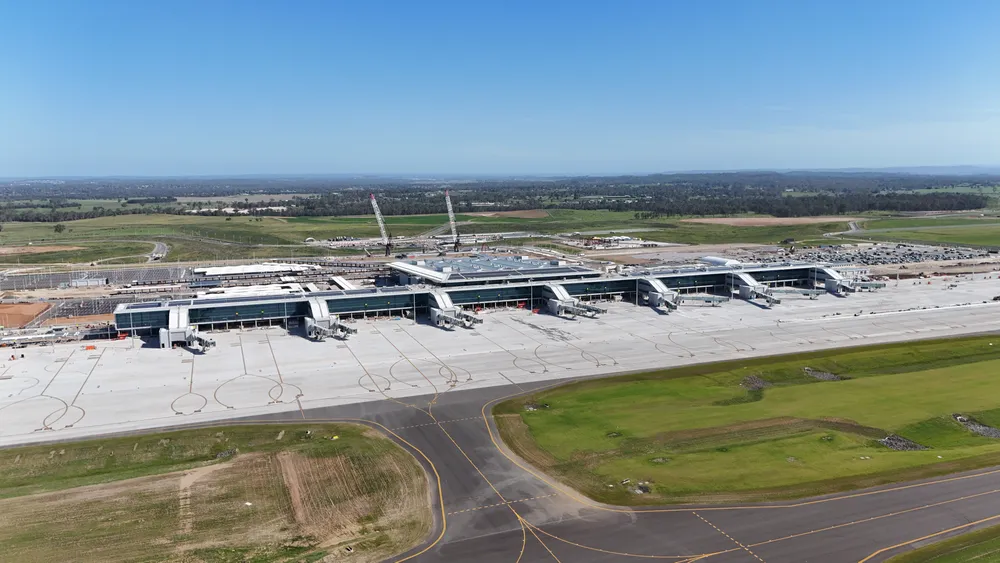
On 25 October 2026 Western Sydney International (Nancy‑Bird Walton) Airport opened its gates to passengers, becoming Greater Sydney’s second commercial airport. The facility, located in Luddenham and Badgerys Creek about 44 km (27 mi) west of the Sydney central business district, is operated by WSA Co Limited, a wholly‑owned subsidiary of the Australian Government. The airport began cargo operations on 26 July 2026, and the new terminal and 3.7‑km runway were completed as the first phase of a staged development plan that will ultimately deliver a fully integrated international and domestic hub.
The decision to build a new airport in Western Sydney followed more than a decade of debate over where to locate a replacement for the congested Sydney Airport. The federal government formally designated the site on 15 April 2014, and the project was framed as a key element of the Western Sydney Aerotropolis plan—a broader strategy to transform the region into a major business and logistics centre. In addition to the runway and terminal, the airport is notable for operating 24 hours a day without a conventional on‑site air‑traffic‑control tower, relying instead on remote monitoring to manage flights.
Sydney Airport’s capacity has been constrained by a legislated curfew and flight‑cap limits that have forced airlines to curtail night operations and reduce the number of departures. By contrast, Western Sydney Airport’s curfew‑free, round‑the‑clock schedule is designed to absorb spill‑over traffic and enable a higher frequency of flights. Airlines have welcomed the additional capacity, citing opportunities to expand schedules and routes, while local communities have expressed concerns about noise and environmental impacts. The government has pledged to mitigate these issues through stringent environmental standards and community engagement.
The airport’s opening is expected to deliver significant economic benefits to the Western Sydney region. The aerotropolis blueprint anticipates the creation of thousands of jobs in construction, aviation services, and ancillary industries such as logistics and tourism. The expanded air transport capacity will also support the region’s growing manufacturing and export sectors, providing a more efficient conduit for high‑value goods—including advanced electronics and agricultural products—to global markets. Furthermore, the new hub will enhance Sydney’s competitiveness as a gateway to the Asia‑Pacific, attracting international carriers and encouraging route development to key destinations.
For Taiwan and the wider Asia‑Pacific region, the operationalization of Western Sydney Airport represents a tangible improvement in connectivity and supply‑chain resilience. Taiwanese airlines could explore new routes between Taipei and Sydney, reducing travel times for business and leisure passengers and strengthening bilateral tourism flows. The airport’s 24‑hour operations and absence of a curfew may also influence aviation policy discussions across the region, demonstrating the viability of curfew‑free, remote‑controlled airports as a cost‑effective solution to capacity constraints. In a broader sense, the project underscores Australia’s commitment to maintaining robust trade links with its Pacific neighbours, a factor that will be increasingly relevant as the global supply chain adapts to new geopolitical and economic realities.
Produced by our editorial team, with AI assistance in editing.