
Venezuela quake death toll climbs to 6,509 after June 7.0 mainshock.
The death toll from the series of powerful quakes that rocked Venezuela in early June has risen to 6,509, the highest figure reported by the country’s civi
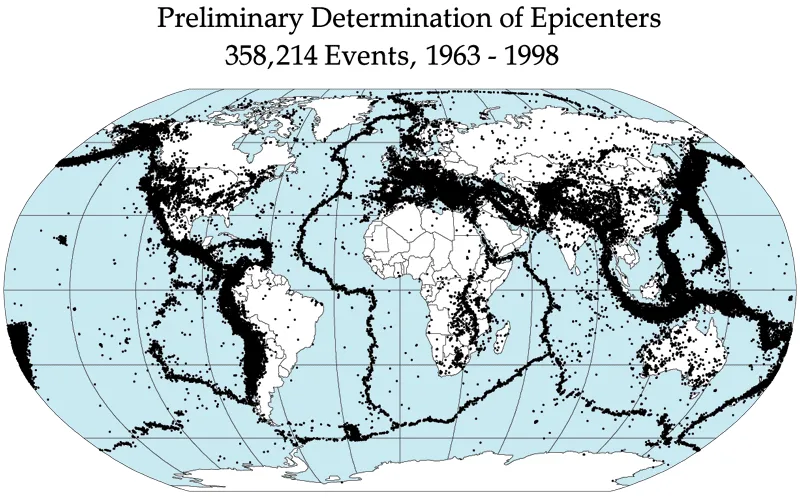
The death toll from the series of powerful quakes that rocked Venezuela in early June has risen to 6,509, the highest figure reported by the country’s civil protection agency on Tuesday. The latest count, released by the National Institute of Civil Defence, includes victims from the main shock on June 2, which measured 7.0 on the moment magnitude scale, as well as subsequent aftershocks that have continued to topple buildings and block access routes across the states of Bolívar, Anzoátegui and Monagas.
Venezuela sits on the complex convergent boundary between the Caribbean and South American plates, a tectonic setting that makes the region prone to sizable seismic events. The June mainshock originated at a depth of roughly 20 kilometres beneath the Andean foothills, a zone where the Caribbean plate is thrusting westward beneath the South American plate. Such plate interactions release stored elastic energy in the lithosphere, generating seismic waves that propagate outward and shake the surface. In this case, the rupture triggered a cascade of aftershocks, some exceeding magnitude 5.5, which hampered rescue operations and exacerbated structural damage.
The government, led by President Nicolás Maduro, has declared a state of emergency and mobilised the military, the National Guard and the Bolivarian National Police to assist in search‑and‑rescue missions, establish temporary shelters, and distribute food and medical supplies. Officials have highlighted the deployment of specialized engineering units to assess the stability of collapsed structures and to clear debris from critical roadways. However, opposition figures and several non‑governmental organisations have criticised the response as “slow and disorganized,” pointing to a lack of transparent coordination and insufficient international assistance. Local NGOs such as Caritas Venezuela and the Red Cross have appealed for more funding and for the lifting of sanctions that they say impede the import of essential rescue equipment and medicines.
International actors have begun to respond, albeit cautiously. The United Nations Office for the Coordination of Humanitarian Affairs (OCHA) announced a $10 million appeal to cover emergency shelter, water, sanitation and health services for the estimated 250,000 displaced persons. Neighboring Colombia, which shares a 2,219‑kilometre border with Venezuela, offered to receive refugees and to send a contingent of emergency medical teams. The United States, which has maintained limited diplomatic engagement with Caracas, expressed “deep concern” over the scale of the disaster and signalled readiness to provide humanitarian aid, provided that it can be delivered through neutral channels.
Experts underscore that the seismic disaster could have longer‑term repercussions for Venezuela’s already fragile economy. The affected region houses key oil‑field infrastructure and hydroelectric plants that supply a substantial share of the nation’s power. Damage to transmission lines and pumping stations could curtail output at a time when the country is grappling with chronic fuel shortages and inflation. Moreover, the destruction of roads and bridges hampers the movement of goods, potentially disrupting the supply chain for food imports, which already account for a large portion of domestic consumption. The humanitarian crisis may also trigger a fresh wave of migration toward Colombia, Brazil and the Caribbean, adding pressure to regional asylum systems already strained by political and economic upheavals.
The earthquake’s impact extends beyond immediate loss of life, touching on broader regional stability. A prolonged disruption to Venezuela’s oil production could tighten global energy markets, especially given the country’s historical role as a significant exporter of crude to the United States and Europe. In addition, the disaster highlights the vulnerability of critical infrastructure in seismically active zones across Latin America, prompting calls for stronger building codes and disaster‑risk financing mechanisms. For neighboring states and international partners, the event serves as a reminder that natural hazards can quickly intersect with economic and geopolitical challenges, underscoring the need for coordinated preparedness and relief strategies in the Caribbean‑South American corridor.
Produced by our editorial team, with AI assistance in editing.