
State Funeral for Former Iranian Supreme Leader Ali Khamenei Begins in Tehran
The state funeral for former Iranian Supreme Leader Ali Khamenei began today at the Grand Mosalla in Tehran, where his body has been placed for the public
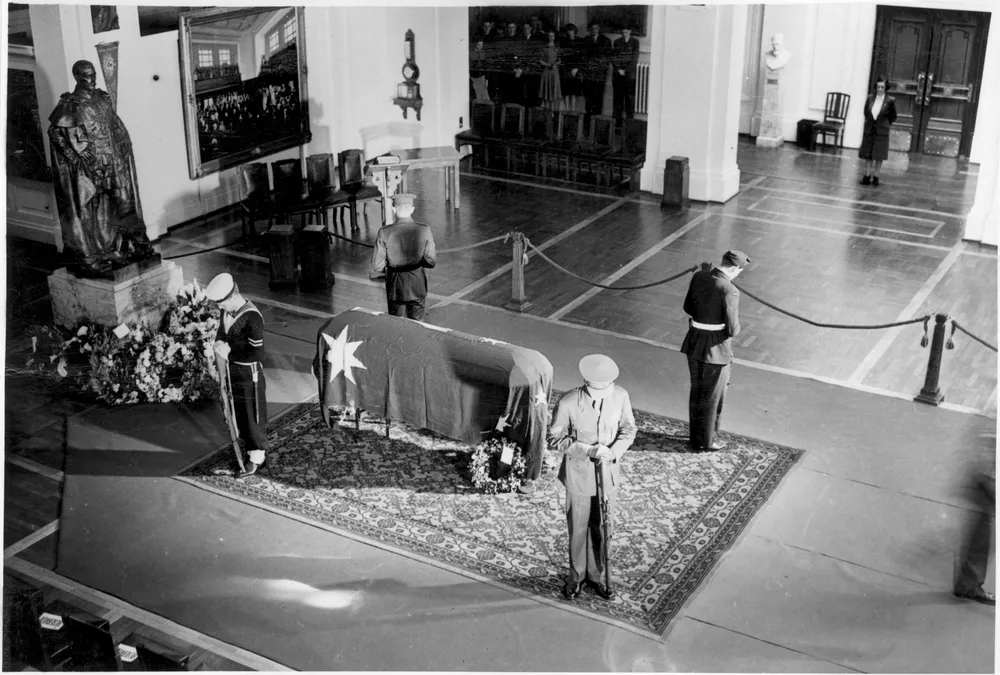
The state funeral for former Iranian Supreme Leader Ali Khamenei began today at the Grand Mosalla in Tehran, where his body has been placed for the public to pay their respects. The state funeral is expected to attract millions of attendees, including foreign dignitaries. It is reported that Khamenei was killed on February 28 on the first day of the Iran War during a joint Israeli and American airstrike on his residence.
To honor Khamenei, the Iranian government decided to hold a state funeral, a public burial ceremony conducted for prominent national figures in accordance with strict ritual protocols. State funerals typically include numerous solemn ceremonies with religious overtones, as well as unique elements of military tradition. Generally, state funerals are held to allow the entire nation to participate in a national day of mourning, conducted with the consent of the deceased's family. Such events frequently draw substantial attention and coverage from national and global media.
Khamenei’s death has had a significant impact on the political situation in Iran and the Middle East, given his prominent status and influence within Iranian politics. His state funeral is also seen as an opportunity for the Iranian government to demonstrate its national strength and unify public sentiment. Observers are closely watching how the state funeral will affect Iran's internal politics and diplomatic relations.
The Iranian government has declared several days of national mourning and called on citizens across the country to participate in the mourning activities. Meanwhile, the Iranian government has launched an investigation into the cause of Khamenei's death, blaming Israel and the United States for his demise. This incident has further escalated tensions between Iran, Israel, and the United States.
For the state funeral, the Iranian government also invited dignitaries and diplomats from multiple countries, including representatives from several Islamic nations and regional organizations. This is viewed as an attempt by the Iranian government to isolate Israel and the United States internationally. Nevertheless, outside observers are also monitoring how this state funeral will impact Iran's diplomatic relations and the regional situation.
For Taiwan, this event holds important reference value for understanding the political landscape and international relations of the Middle East. Although Taiwan and Iran do not maintain direct political and economic ties, the impact of this event on regional security and global politics is worthy of attention. At the same time, this incident highlights the significant role and influence of national leaders in international politics, as well as the complex diplomatic relations and political maneuvering among nations.
Produced by our editorial team, with AI assistance in editing.