
Six Flags X2 coaster halted after two riders suffer brain hemorrhages
Six Flags Magic Mountain’s X2 bi‑directional four‑dimensional coaster, located in Valencia, California, was announced on 12 July 2026 as being taken out of
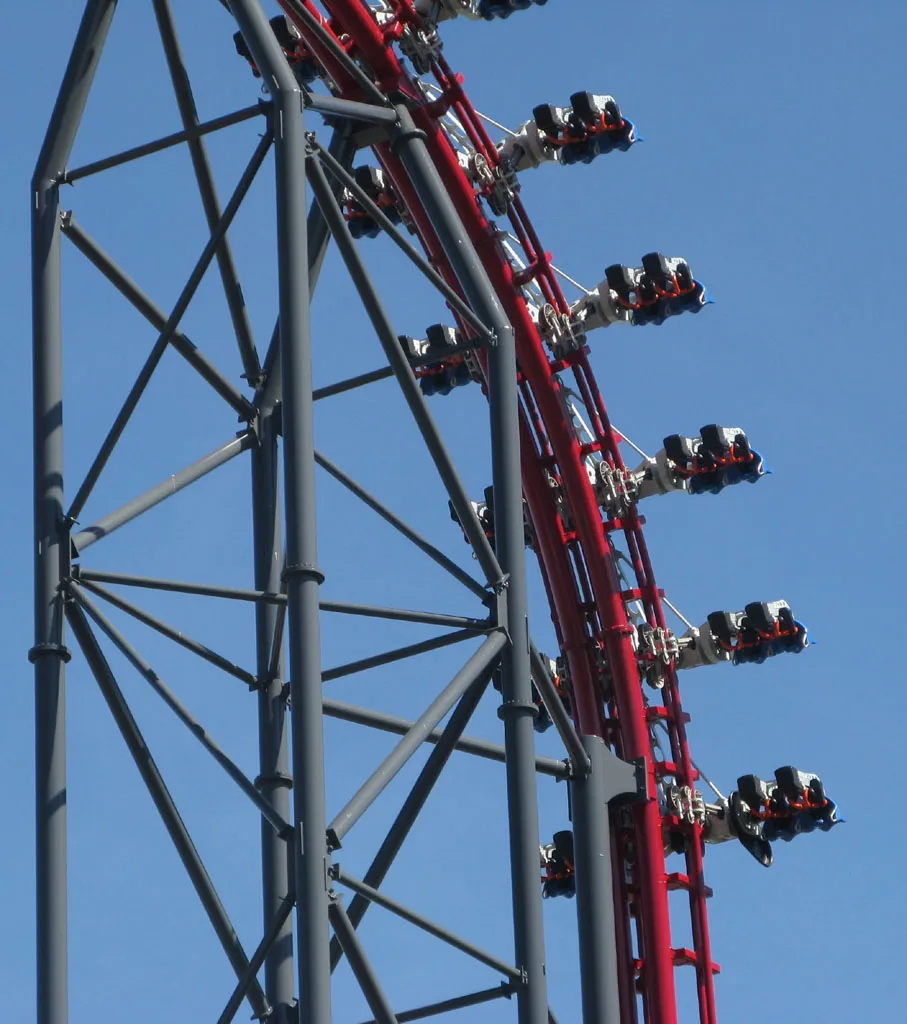
Six Flags Magic Mountain’s X2 bi‑directional four‑dimensional coaster, located in Valencia, California, was announced on 12 July 2026 as being taken out of operation. CNN reported earlier this month that two riders were rushed to hospital with brain hemorrhages after the ride; one of them remained in a coma as of 27 August, prompting widespread public concern over amusement‑park safety.
The attraction, originally called X, officially opened on 12 January 2002 as the world’s first four‑dimensional steel roller coaster and the final product built by Arrow Dynamics. Its hallmark was a seat‑mounted mechanism that could rotate 360 degrees forward or backward independently, delivering riders a unique sensation of weightlessness and rolling. Between 2007 and 2008 the park refurbished the coaster as X2, updating its paint scheme, installing third‑generation train cars, adding on‑board sound, smoke and flame effects, and elevating it to one of the most high‑profile thrill rides in the United States at the time.
The injuries occurred shortly after a routine inspection. Both passengers experienced sudden severe dizziness while riding and were diagnosed with brain hemorrhages at the hospital. Six Flags issued a statement saying it had immediately shut down the train and launched an internal safety review, cooperating with the California Consumer Product Safety Commission (CPSC) and local medical authorities in an investigation. CNN noted that the coaster had previously been temporarily closed in 2025 due to an abnormality in the train‑locking mechanism, suggesting possible gaps in maintenance records.
The U.S. Consumer Product Safety Commission has dispatched experts to the site, demanding that Six Flags supply complete maintenance and inspection documentation and has temporarily prohibited modifications to similar mechanisms on roller coasters nationwide. Industry observers warn that the complex mechanical architecture and high‑speed inversions of four‑dimensional coasters require far stricter inspection and upkeep standards than conventional rides; without rigorous compliance, comparable incidents could recur. Several law firms have announced they will represent the injured riders in seeking legal accountability from the park and the coaster’s manufacturer.
For Taiwan, the accident underscores the challenges of safety management for high‑technology entertainment attractions. In recent years Taiwan has been constructing a number of large‑scale theme parks and virtual‑reality experience centers. Relevant authorities could look to the United States’ inspection procedures and incident‑reporting mechanisms as references, strengthening periodic audits and third‑party verification of high‑risk equipment such as dynamic seats and rotating mechanisms. Such measures would help prevent safety lapses, protect visitors, and bolster confidence in Taiwan’s entertainment sector within the international tourism market.
Produced by our editorial team, with AI assistance in editing.