Mount Sinabung erupts, 3,500‑metre ash plume prompts evacuations
An eruption at Mount Sinabung in North Sumatra sent a plume of ash to an altitude of roughly 3,500 metres on the morning of 1 September, prompting local of
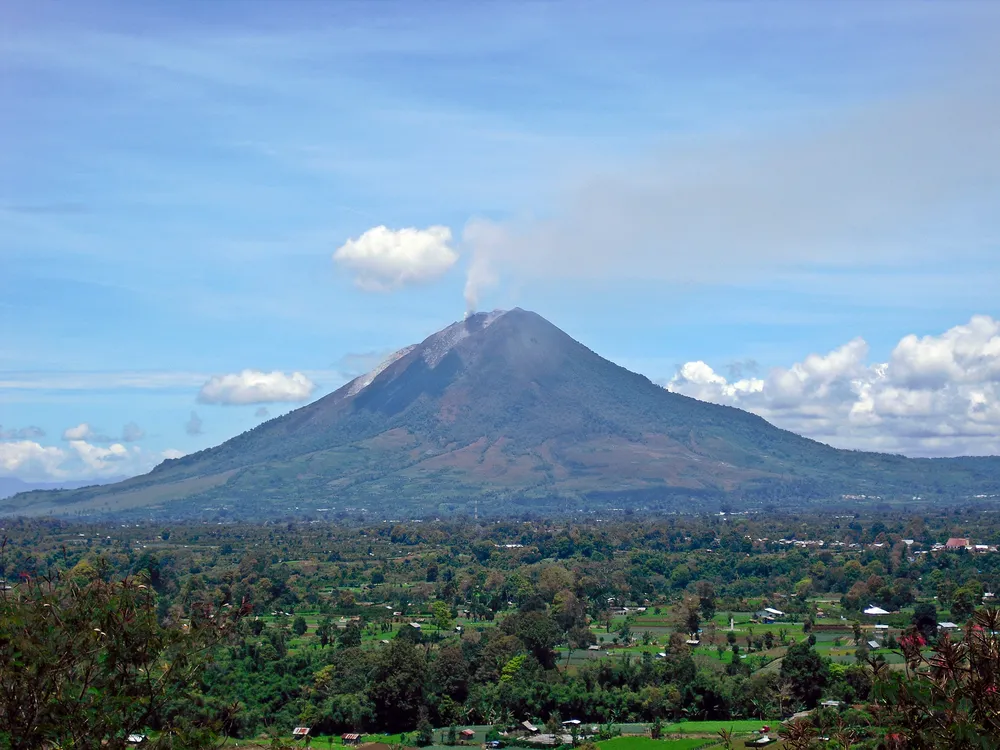
An eruption at Mount Sinabung in North Sumatra sent a plume of ash to an altitude of roughly 3,500 metres on the morning of 1 September, prompting local officials to order the evacuation of residents and visitors around the nearby Lake Lau Kawar. The ash cloud, which drifted southeastward, prompted the Indonesian Agency for Meteorology, Climatology and Geophysics (BMKG) to raise the volcano’s alert level to “Siaga 3,” indicating a heightened risk of further explosive activity. By mid‑day, evacuation centres in Karo Regency had begun receiving families displaced from villages on the volcano’s southern and western slopes, while authorities warned of possible disruptions to road traffic and air travel in the region.
Mount Sinabung is a stratovolcano composed of andesite and dacite that rises from the Karo plateau, about 40 kilometres north of the larger Lake Toba. After a long dormancy that lasted more than a millennium, the volcano re‑awakened in 2010, and has since produced a series of eruptions in 2013, 2014, and a sustained eruptive phase that began in August 2020. Historically, the volcano’s most significant eruptive episodes have been marked by frequent ash emissions, lava flows, and occasional pyroclastic density currents, which have claimed at least 23 lives since 2014. The current activity follows a pattern of intermittent explosions that have kept the surrounding population on high alert, and it underscores the volcano’s capacity to generate ash plumes that can travel hundreds of kilometres.
The provincial disaster management agency (BPBD) and the National Disaster Management Authority (BNPB) activated emergency protocols within an hour of the eruption. Officials coordinated with the Indonesian Armed Forces to secure evacuation routes and to set up temporary shelters equipped with basic supplies, medical kits and sanitation facilities. Over 8,000 people have been moved to safe zones in the towns of Kabanjahe and Berastagi, while the government has deployed ash‑removal teams to clear major highways that link the interior of Sumatra to the coastal ports of Medan and Belawan. In parallel, the BMKG issued aviation advisories, urging airlines to avoid the ash‑contaminated airspace and to monitor visibility at nearby airports, including the Kualanamu International Airport, which serves as a regional hub for cargo and passenger traffic.
For the local economy, the eruption poses immediate challenges. The ashfall has blanketed agricultural fields that produce vegetables, coffee and spices, threatening crop yields and prompting concerns among smallholder farmers about loss of income. Tourism, which has been a growing sector around Lake Lau Kawar and the highland villages, has also been curtailed as hiking trails and scenic viewpoints remain closed for safety. Moreover, the ash plume has reduced air quality in nearby towns, prompting health warnings for vulnerable groups such as children, the elderly and those with respiratory conditions. While the government has pledged financial assistance and relief packages, the scale of displacement and the need for long‑term reconstruction of damaged infrastructure remain uncertain.
The eruption carries implications beyond Indonesia’s borders. Ash clouds from Sumatra can drift across the Strait of Malacca and affect air quality in neighbouring countries, including Malaysia and Singapore, and in some cases have been known to reach as far as the Philippines. For Taiwan, the event is a reminder of the shared volcanic risk in the region; Taiwan’s own active volcanoes, such as Tatun and the offshore undersea systems, are monitored closely for similar eruptive behaviour. Moreover, disruptions to air traffic and shipping lanes in the Strait of Malacca—a critical artery for global trade that handles a sizable portion of the world’s container traffic—can have downstream effects on supply chains that Taiwan depends on, particularly for raw materials and electronic components. The coordinated response between Indonesian agencies and international aviation bodies also provides a case study in cross‑border disaster management, offering valuable lessons for Taiwan’s own emergency preparedness frameworks.
Produced by our editorial team, with AI assistance in editing.