
Japan dispatches naval vessel to aid Indonesia's Riau forest fire response
The Japan Maritime Self‑Defense Force’s (JMSDF) supply vessel JS Kunisaki set sail from the naval base at Kure in Hiroshima Prefecture on Monday, bound for
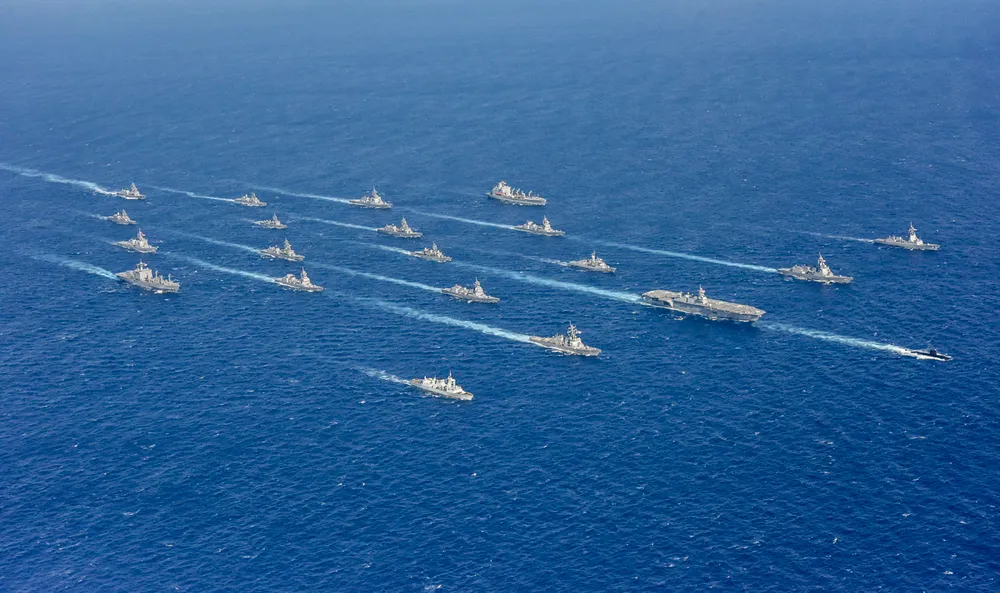
The Japan Maritime Self‑Defense Force’s (JMSDF) supply vessel JS Kunisaki set sail from the naval base at Kure in Hiroshima Prefecture on Monday, bound for the Indonesian province of Riau where massive forest fires have been raging for weeks. The ship, which is equipped to carry water‑borne firefighting equipment and provide logistical support, is slated to arrive in the affected area within 48 hours to assist local authorities in containing the blazes that have already forced thousands of residents to evacuate and have degraded air quality across much of Southeast Asia.
Japan’s decision to dispatch a naval asset follows a series of high‑level discussions between Tokyo and Jakarta on regional disaster response cooperation. The JMSDF, established in 1954 as Japan’s post‑war naval force, now operates a fleet of roughly 160 ships, 346 aircraft and a personnel complement of about 50,800. Although its primary mandate is the defence of Japan’s maritime interests, the force has increasingly been called upon for non‑combat missions, ranging from anti‑piracy patrols off the Horn of Africa to humanitarian assistance and disaster relief (HADR) operations in the Indo‑Pacific. The deployment of JS Kunisaki therefore reflects a broader trend in which Japan leverages its maritime capabilities to support neighboring countries during emergencies, reinforcing its commitment to regional stability and cooperation.
Indonesia’s forest‑fire crisis, driven by a combination of prolonged drought, illegal slash‑and‑burn agriculture and inadequate enforcement, has become a recurring environmental and public‑health challenge. The current conflagrations have scorched tens of thousands of hectares of peatland, released thick haze that has drifted across national borders, and threatened critical infrastructure, including power plants and transport routes. Jakarta has appealed for international assistance, and Japan’s contribution is part of a wider coalition that includes Australia, Malaysia and the United States, all of which have pledged resources such as aircraft, fire‑fighting crews and financial aid. While Indonesia retains the lead in coordinating the response, the involvement of foreign military assets underscores the transnational nature of the problem and the need for coordinated logistics, expertise and equipment.
From Japan’s perspective, the operation serves multiple strategic purposes. Providing tangible aid enhances Tokyo’s diplomatic standing in Southeast Asia, a region where China’s influence has been expanding through infrastructure investment and security partnerships. By demonstrating a willingness to act swiftly in a humanitarian capacity, Japan seeks to deepen bilateral ties with Indonesia, its largest trading partner in the region, and to showcase the operational readiness of its maritime forces for rapid deployment. The JMSDF’s participation also offers practical training for its crews in complex HADR scenarios, sharpening interoperability with other nations’ forces that may be called upon in future crises.
The deployment matters for the broader region because effective disaster response can mitigate economic disruption, protect public health and preserve critical supply chains that underpin global manufacturing, including the semiconductor and automotive sectors that rely on stable inputs from Southeast Asian economies. Moreover, the haze generated by peat‑fire combustion has been linked to respiratory illnesses and reduced labor productivity, issues that reverberate beyond Indonesia’s borders. By contributing resources to contain the fires, Japan not only aids an immediate humanitarian need but also helps safeguard regional economic resilience and environmental stability—factors that are integral to the security and prosperity of neighboring economies, Taiwan included, which depend on uninterrupted trade routes and a healthy, predictable climate for their high‑tech industries.
Produced by our editorial team, with AI assistance in editing.