
Earliest Known Dinosaur Skeleton Discovered in Antarctica, Offering Clues to Ancient Evolution
Recently, paleontologists analyzed a vertebra fossil collected in 1985 from James Ross Island in Antarctica and confirmed it to be the earliest discovered
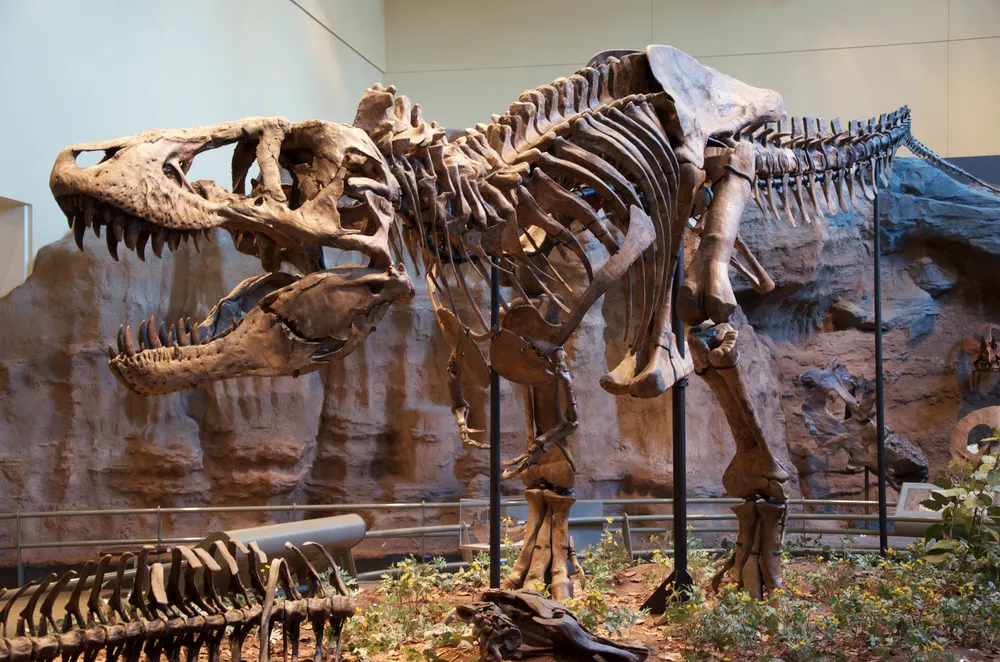
Recently, paleontologists analyzed a vertebra fossil collected in 1985 from James Ross Island in Antarctica and confirmed it to be the earliest discovered dinosaur fossil skeleton in the continent. The fossil was identified as a tail bone from a Titanosaurus. This discovery holds significant importance in the field of paleontology as it provides new clues for the study of dinosaur evolution and distribution.
Paleontology is a scientific field that studies past life forms, primarily through the analysis of fossils, to understand the evolution, ecological environments, and geological time of ancient organisms. Paleontologists use fossils to classify organisms, measure geological time, and evaluate the interactions between ancient organisms and their natural environments. The development of paleontology dates back to the 6th century BC, but it was established as a scientific discipline by Georges Cuvier in 1796. He proved the concept of extinction and the differences between past and present life. In the following decades, paleontology rapidly developed, with the introduction of the French term "paléontologie" in 1822 to describe the field. Charles Darwin's theory of evolution also made significant contributions to the development of paleontology. Evolution and extinction are complementary processes that have shaped the history of life.
Paleontology is closely related to geology and biology, and scientists use techniques and methods to study fossils and ancient organisms. Paleontologists use studies of fossils to understand the structure, behavior, and ecological environments of ancient organisms. The discovery of the dinosaur fossil skeleton in Antarctica provides new evidence of the distribution and evolution of dinosaurs in the continent. Antarctica was an important habitat for dinosaurs during the Mesozoic era, and this discovery also confirms the existence of dinosaurs in Antarctica.
This discovery has sparked discussions among paleontologists about the survival and extinction of dinosaurs in Antarctica. Antarctica was an important habitat for dinosaurs during the Mesozoic era, but due to climate change and geological changes, the distribution and evolution of dinosaurs in Antarctica were affected. The discovery of the fossil skeleton provides new clues for the study of dinosaur survival and extinction in Antarctica.
The study of paleontology not only has significant importance for understanding the evolution and ecological environments of ancient organisms but also has important implications for modern biology and ecology. The study of paleontology can provide references for the evolution and ecological environments of modern organisms and help us understand the history and future changes of the Earth.
For Taiwan, this discovery has significant importance for understanding the latest progress in international paleontology research. Although the discovery has limited direct relevance to Taiwan, it has significant importance for understanding the history of the Earth and the evolution of ancient organisms. In addition, the study of paleontology can provide references for the evolution and ecological environments of modern organisms and help us better protect and conserve the biodiversity of Taiwan.
Produced by our editorial team, with AI assistance in editing.