
Drone attack in Sudan kills at least 10, sparking debate over unmanned warfare.
A recent drone attack in Sudan, carried out by a drone operated by the Rapid Support Forces, targeted a group of civilians traveling to attend a wedding ne
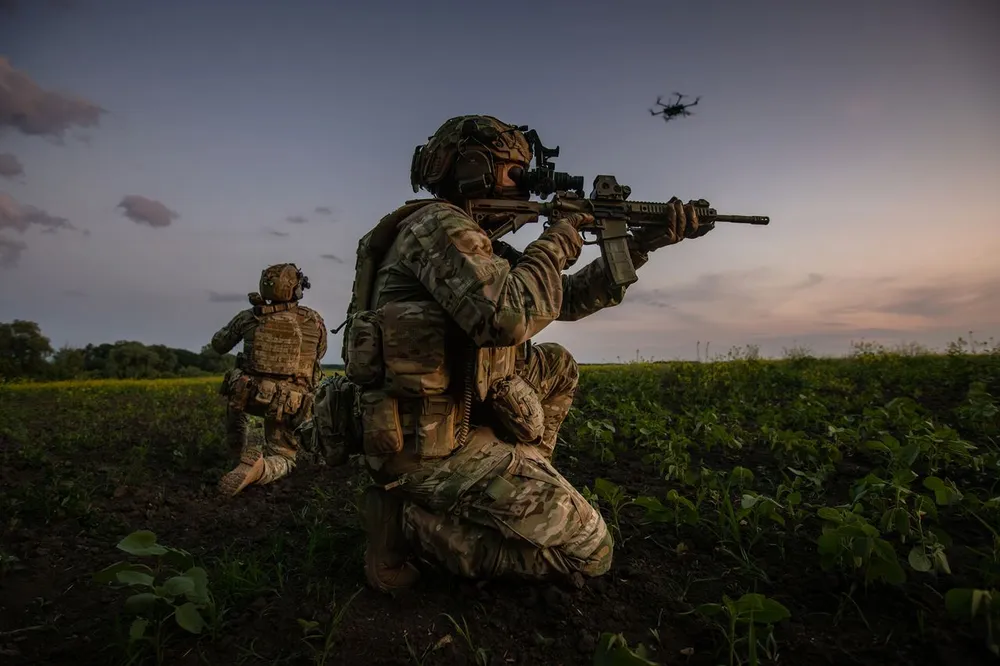
A recent drone attack in Sudan, carried out by a drone operated by the Rapid Support Forces, targeted a group of civilians traveling to attend a wedding near Omdurman, resulting in at least 10 deaths. This incident has once again sparked attention and controversy surrounding drone warfare.
Drone warfare is a new form of warfare involving the deployment of military robots and unmanned systems. These unmanned systems can be operated by remotely located pilots or possess varying degrees of autonomy during missions. Drones can serve as a force multiplier, supplementing or reducing the need to deploy active-duty personnel in combat operations. Types of unmanned systems and platforms include unmanned combat aerial vehicles (UCAVs), weaponized commercial unmanned aerial vehicles (UAVs), unmanned surface vehicles (USVs), unmanned underwater vehicles (UUVs), and unmanned ground vehicles (UGVs). Additionally, there are small unmanned aerial vehicles (SUAVs) and micro air vehicles (MAVs) that can be carried by individuals and used for low-altitude, short-range support operations. Autonomous drones, such as autonomous aircraft and lethal autonomous weapons (LAWs), utilize artificial intelligence or pre-programmed algorithms.
In recent years, the application scope of drone warfare has expanded into various aspects, including reconnaissance missions, kamikaze missions, logistical support, bomb disposal, training, and medical evacuation. Many countries already possess drone combat capabilities, including China, France, Greece, India, Iran, Iraq, Israel, Italy, Pakistan, Poland, Russia, South Korea, Turkey, the United States, the United Kingdom, and Ukraine. These nations have utilized drones across various theaters of war and conflicts, demonstrating the formidable power and efficiency of drone warfare.
The drone attack in Sudan has also raised concerns regarding the ethical and legal issues of drone warfare. The use of drone warfare can lead to civilian casualties and property damage, and may also violate international humanitarian law and human rights law. Therefore, nations need to strengthen the regulation and oversight of drone warfare to ensure that its use complies with international law and ethical standards.
Regarding the development and application of drone warfare, countries need to conduct in-depth research and discussions to explore its advantages and disadvantages, while also strengthening international cooperation and coordination to ensure that the use of drone warfare complies with international law and ethical standards. At the same time, nations must enhance their defense and countermeasure capabilities against drone warfare to safeguard their national security and interests.
For Taiwan, the development and application of drone warfare hold significant implications for regional security and the international situation. Taiwan needs to monitor the development trends and application scope of drone warfare while simultaneously strengthening its own drone warfare and defense capabilities to ensure national security and interests. Furthermore, Taiwan must enhance international cooperation and coordination, participating in international organizations and mechanisms to jointly regulate and oversee the use of drone warfare and maintain regional peace and stability.
Produced by our editorial team, with AI assistance in editing.