
Deadly Drone Attack Rocks Sudan's White Nile State, Leaving 2 Dead and 7 Injured.
A drone attack in the city of Labak, in Sudan's White Nile state, has left 2 people dead and 7 injured. The assault was carried out by the Rapid Support Fo
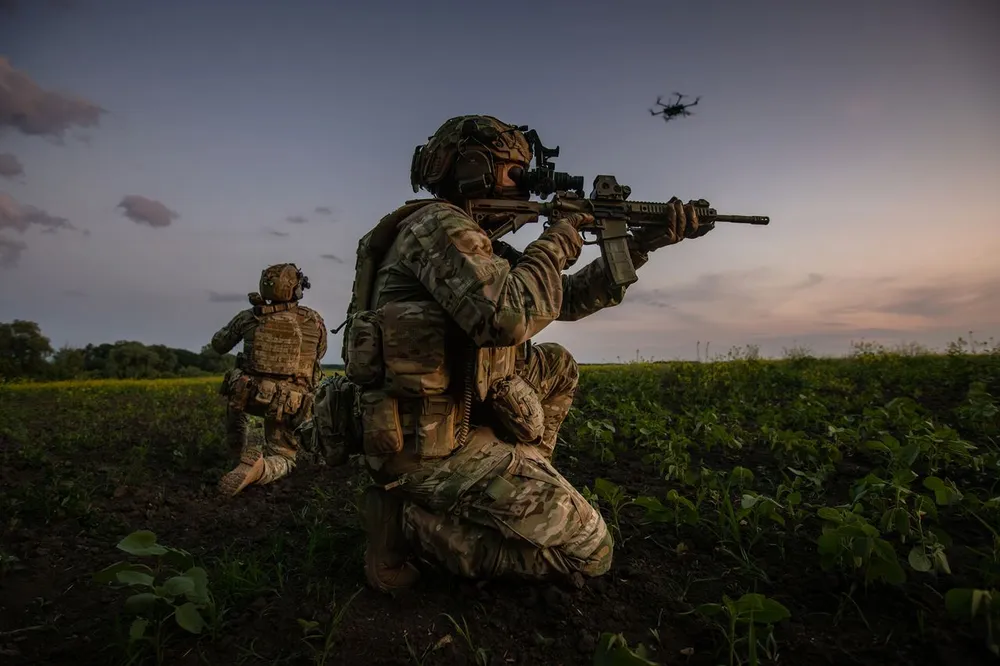
A drone attack in the city of Labak, in Sudan's White Nile state, has left 2 people dead and 7 injured. The assault was carried out by the Rapid Support Forces (RSF), a paramilitary organization, targeting a fuel station. The incident has once again raised concerns and controversy over drone warfare.
Drone warfare is a form of warfare that involves deploying military robots and unmanned systems. These unmanned systems can be remotely controlled by pilots or have varying degrees of autonomy during their missions. Drones can serve as a force multiplier, supplementing or reducing the need for frontline personnel in combat. The types of unmanned systems and platforms include unmanned combat air vehicles (UCAV) or weaponized commercial unmanned aerial vehicles (UAV), unmanned surface vessels (USV) or unmanned underwater vehicles (UUV), as well as unmanned ground vehicles (UGV). Small unmanned aerial vehicles (SUAV) and micro unmanned aerial vehicles (MAV) are portable drones that can be deployed in low-altitude, short-range support operations. Autonomous drones, such as autonomous aircraft and autonomous missiles, utilize artificial intelligence or pre-programmed algorithms.
In recent years, the application of drone warfare has expanded to various fields, including reconnaissance missions, strike operations, logistics support, bomb disposal, training, and medical evacuations. Many countries have invested in the development and application of drone warfare, including China, France, Greece, India, Iran, Iraq, Israel, Italy, Pakistan, Poland, Russia, South Korea, Turkey, the United States, the United Kingdom, and Ukraine, among others. The drone warfare capabilities of these countries have reached a new level, and will have a profound impact on future warfare forms and international security dynamics.
In Africa, the application of drone warfare is also increasing. Many African countries are facing security challenges such as internal conflicts, terrorism, and border disputes, and drone warfare is seen as an effective countermeasure. However, drone warfare has also raised concerns about human rights and international law, particularly with regards to target identification and civilian protection. Therefore, the international community needs to strengthen the regulation and monitoring of drone warfare to ensure its application in warfare is lawful and humanitarian.
Regarding the RSF's drone attack in Labak, the international community needs to conduct further investigation and assessment. Does this attack comply with international humanitarian law and human rights law? Are there civilian casualties and property damage? These questions need to be answered in order to make a fair assessment of this attack.
For Taiwan, this drone attack serves as a reminder to pay attention to the changes in international security dynamics and the development trends of drone warfare. Although Taiwan is not currently directly involved in Africa's security affairs, the application and development of drone warfare will have a profound impact on regional security and international order. Therefore, Taiwan needs to strengthen its attention and analysis of international security dynamics, and also strengthen its national defense capabilities and security measures to prepare for potential future security challenges.
Produced by our editorial team, with AI assistance in editing.