
Chiba Institute of Technology
Japan · Asia
About
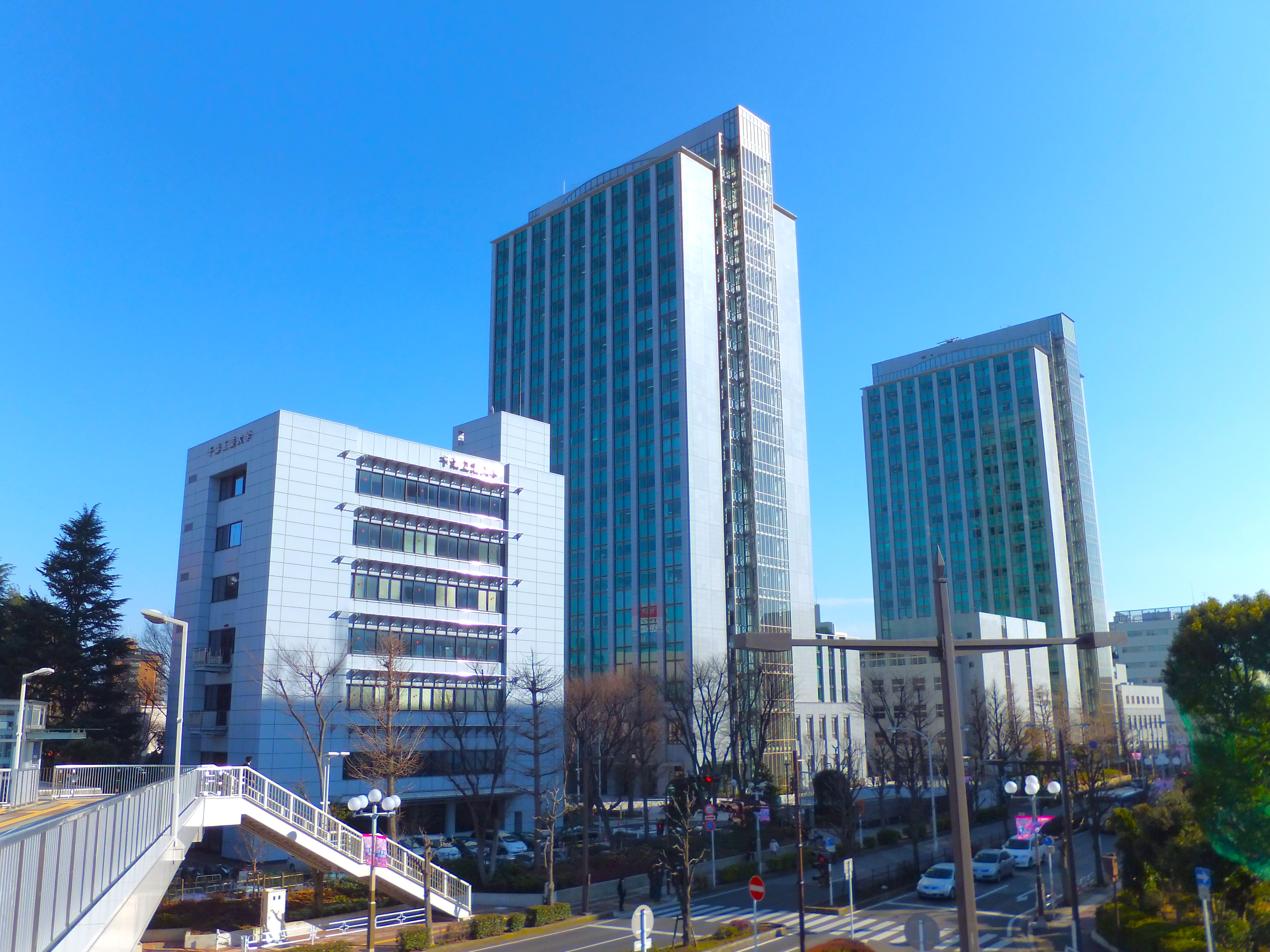
Chiba Institute of Technology (Japanese: , romanized: Chiba kōgyō daigaku; CIT, CT, or Chibatech) is a private university in Narashino, Chiba, Japan. It is the oldest private technical university in Japan founded in 1942. The university operates three campuses (Tsudanuma, Shin-Narashino, and Tokyo Skytree Town) and currently enrolls approximately 9,935 students across five undergraduate faculties: one English-taught School of Design & Science, and five graduate schools. Chibatech specialises in engineering, information science, creative engineering, advanced engineering, and management science, with strong emphasis on robotics, planetary exploration, artificial intelligence, and ocean-resource research. Since July 2023, the 14th president of the university has been Joichi Ito. Under his leadership, the university has expanded international partnerships, launched its first fully English-language undergraduate programme (School of Design & Science) in 2025, and established the Henkaku Center for radical interdisciplinary innovation. Chibatech maintains active research centres including the Future Robotics Technology Center (fuRo), the Planetary Exploration Research Center (PERC), the Ocean Resources Research Center for Next Generation (ORCeNG), the STAIR Lab for artificial intelligence, and the Henkaku Center. The university consistently ranks among Japan's leading private technical institutions and is known for producing engineers who have contributed to major projects in gaming (Nintendo Entertainment System), animation, robotics, and space exploration.
Chiba Institute of Technology offers a comprehensive range of undergraduate and graduate programs centered on engineering, technology, and interdisciplinary innovation. The university prioritizes hands-on, project-based learning to equip students with practical skills for real-world applications, aligning with its motto of "teachers and students walking together" through self-directed study and discipline. With approximately 9,935 students, including a significant portion in STEM fields, the institution fosters an environment that integrates cutting-edge research with education. In 2016, the undergraduate structure was reorganized into five faculties encompassing 17 departments to promote specialized yet collaborative training. Further evolutions occurred in 2024, with the Faculty of Information and Computer Science renamed to the Faculty of Innovative Information Science and the Faculty of Social Systems Science to the Faculty of Innovative Management Science, reflecting a forward-looking emphasis on information-driven leadership. In July 2025, the university introduced its inaugural English-language program, the School of Design & Science, to attract global talent and blend design thinking with scientific inquiry. The undergraduate curriculum spans four years, culminating in a bachelor's degree, with opportunities for internships, international exchanges, and capstone projects. Admission is competitive, with an acceptance rate of around 36% and annual tuition fees ranging from ¥1,200,000 to ¥1,500,000 (excluding additional fees). Credit transfer agreements facilitate seamless mobility with 34 local Chiba institutions, the Open University of Japan, and Chiba University.
In July 2023, Joichi Ito was named the 14th President. In August 2023, Chiba Institute of Technology is listed as participating in the Japan-U.S. Research Collaboration Week. In September 2023, the President's Message was released and outlined three key points for the future of the university including the need to elevate IT engineers in society, the importance of applying acquired knowledge and technical skills to the real world, and the need to form a deep connection with society through project-based learning. In October 2023, Mount Sinai's Icahn School of Medicine in New York City announced a partnership with the Chiba Institute of Technology to work together on using artificial intelligence for cardiovascular disease research in order to make it more efficient and results more rapidly. In October 2024, Chiba Institute of Technology President Joi Ito presented an honorary doctorate degree to Princess Akiko of Mikasa. In November 2024, Chiba Institute of Technology President Joi Ito awarded an honorary doctorate to Robert S. Langer. In May 2025, Chiba Institute of Technology President Joi Ito conferred honorary doctorates to His Majesty King Jigme Khesar Namgyel Wangchuck, Laurene Powell Jobs and Reid Hoffman in recognition of their notable contributions to society. In July 2025, at the 2025 Symposium on Design and Science, President Ito launched the Chiba Institute of Technology (Chibatech) School of Design & Science. This is the university's first English-language program, starting with seven faculty members, Hiro (Sputniko) Ozaki, Catharina Maracke, Joe Austerweil, Mizuki Oka, Ira Winder, Hiroki Kojima and Daum Kim. During the symposium, the Henkaku Center at Chiba Institute of Technology (Chibatech) awarded artist Christine Sun Kim the inaugural Radical Transformation Award. The honor included a JPY 10 million (USD 68,000) award funded by philanthropist Reid Hoffman. On September 19, 2025, an event was held with Princess Akiko of Japan to announce the start of a new excavation survey at the Ayanlar Höyük site in Şanlıurfa Province, Republic of Turkey. The new excavation is a collaboration between Chiba Institute of Technology and Anatolian Archaeology. As part of the event, a groundbreaking ceremony was held as part of the Tash Tepeler project led by the Turkish Ministry of Culture and Tourism. The significance of the project is that it focuses on a turning point in human history about 12,000 years ago. Also in attendance from Chiba Institute of Technology was Chairman Setokuma Osamu, President Joichi Ito, Executive Director Someya Akito, Councillor Yokoi Yutaka (former Ambassador to Turkey), and Corporate Secretary Fukue Satoshi . Also attending were researchers Tada Masahiro, Shimokama Kazuya, and Satake Wataru from the Center for Earth Sciences. In May 2026, Mitsubishi Electric and Chiba Institute of Technology signed a basic agreement to co-research and develop homegrown physical AI technologies and establish a co-creation center to commercialize AI robotics solutions (including multi-legged walking robots, humanoid robots and drone-type robots); the agreement is planned to last three years, ending in April 2029.
Adapted from Wikipedia (CC BY-SA). Photography via Wikimedia Commons.