
Banjica concentration camp
Serbia · Europe
About
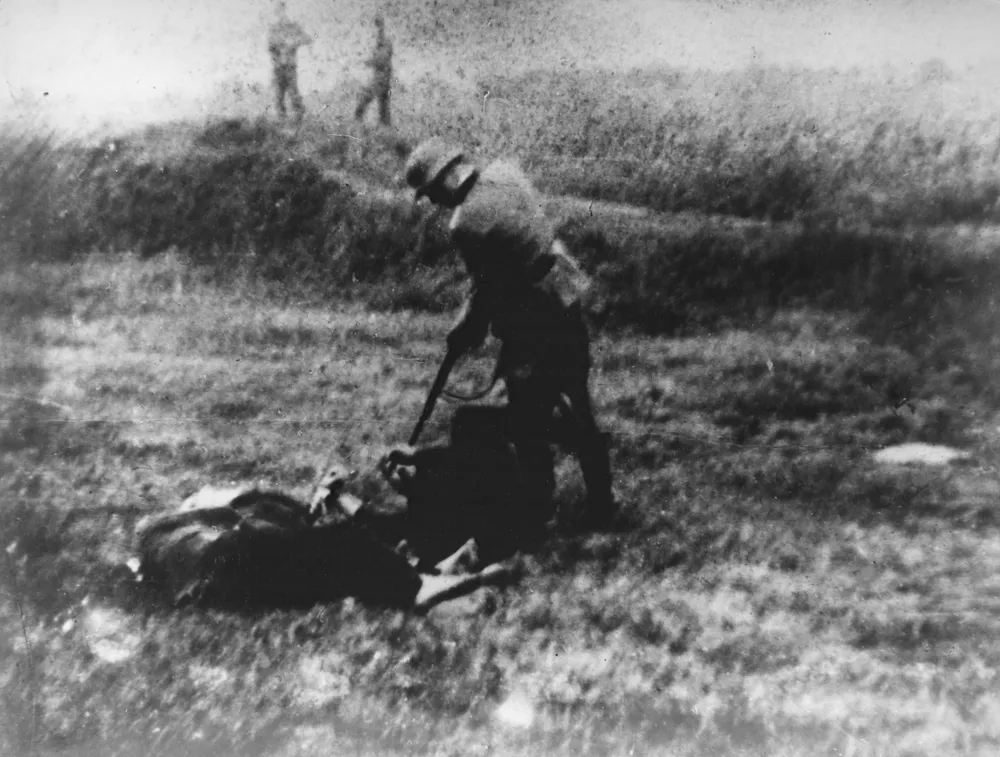
The Banjica concentration camp (German: KZ Banjica, Serbian: Бањички логор, Banjički logor) was a Nazi German concentration camp in the Territory of the Military Commander in Serbia, the military administration of the Third Reich established after the Invasion and occupation of Yugoslavia during World War II. In response to escalating resistance, the German army instituted severe repressive measures – mass executions of civilian hostages and the establishment of concentration camps. Located in the Banjica neighborhood of Dedinje—a suburb of Belgrade—it was originally used by the Germans as a center for holding hostages. The camp was later used to hold anti-fascist Serbs, Jews, Romani people, captured Partisans, Chetniks and other opponents of Nazi Germany. By 1942, most executions occurred at the firing ranges at Jajinci, Marinkova Bara and the Jewish cemetery. Banjica was operational from July 1941 to October 1944. It was jointly run by German occupiers under the command of Gestapo official Willy Friedrich and the Milan Nedić's puppet government, which was under full control of the occupational forces. However although German forces took the leading and guiding role of the Final Solution in Serbia, and the Germans monopolized the killing of Jews, they were actively aided in that role by Serbian collaborators. Later, Friedrich was tried, found guilty and executed for war crimes by Yugoslavia's post-war communist authorities. 23,697 individuals were detained in Banjica throughout the war, at least 3,849 of whom perished. After the war, a small monument dedicated to the victims of the camp was constructed. The site is now a museum.
Following the 1938 Anschluss between Germany and Austria, Yugoslavia shared a border with the Third Reich and came under increasing pressure as her neighbours aligned themselves with the Axis powers. In April 1939, Italy opened a second frontier with Yugoslavia when it invaded and occupied neighbouring Albania. At the outbreak of World War II, the Yugoslav government declared its neutrality. Between September and November 1940, Hungary and Romania joined the Tripartite Pact, aligning themselves with the Axis, and Italy invaded Greece. From that time, Yugoslavia was almost completely surrounded by the Axis powers and their satellites, and her neutral stance toward the war became strained. In late February 1941, Bulgaria joined the Pact. The following day, German troops entered Bulgaria from Romania, closing the ring around Yugoslavia. Intending to secure his southern flank for the impending attack on the Soviet Union, Adolf Hitler began placing heavy pressure on Yugoslavia to join the Axis. On 25 March 1941, after some delay, the Yugoslav government conditionally signed the Pact. Two days later, a group of pro-Western, Serbian nationalist Royal Yugoslav Air Force officers deposed the country's regent, Prince Paul, in a bloodless coup d'état, placed his teenaged nephew Peter on the throne, and brought to power a "government of national unity" led by General Dušan Simović. The coup enraged Hitler, who immediately ordered the country's invasion, which commenced on 6 April 1941.
Yugoslavia was quickly overwhelmed by the combined strength of the Axis powers and surrendered in less than two weeks. The government and royal family went into exile, and the country was occupied and dismembered by its neighbours. The German-occupied territory of Serbia was reduced to the Kingdom of Serbia's pre-Balkan War borders and was kept under directly military occupation by the Germans due to the key rail and riverine transport routes that passed through it, as well as its valuable resources, particularly non-ferrous metals. The occupied territory covered about 51,000 km2 and had a population of 3.8 million.
Adapted from Wikipedia (CC BY-SA). Photography via Wikimedia Commons.