
American Museum of Natural History
United States · Americas
About
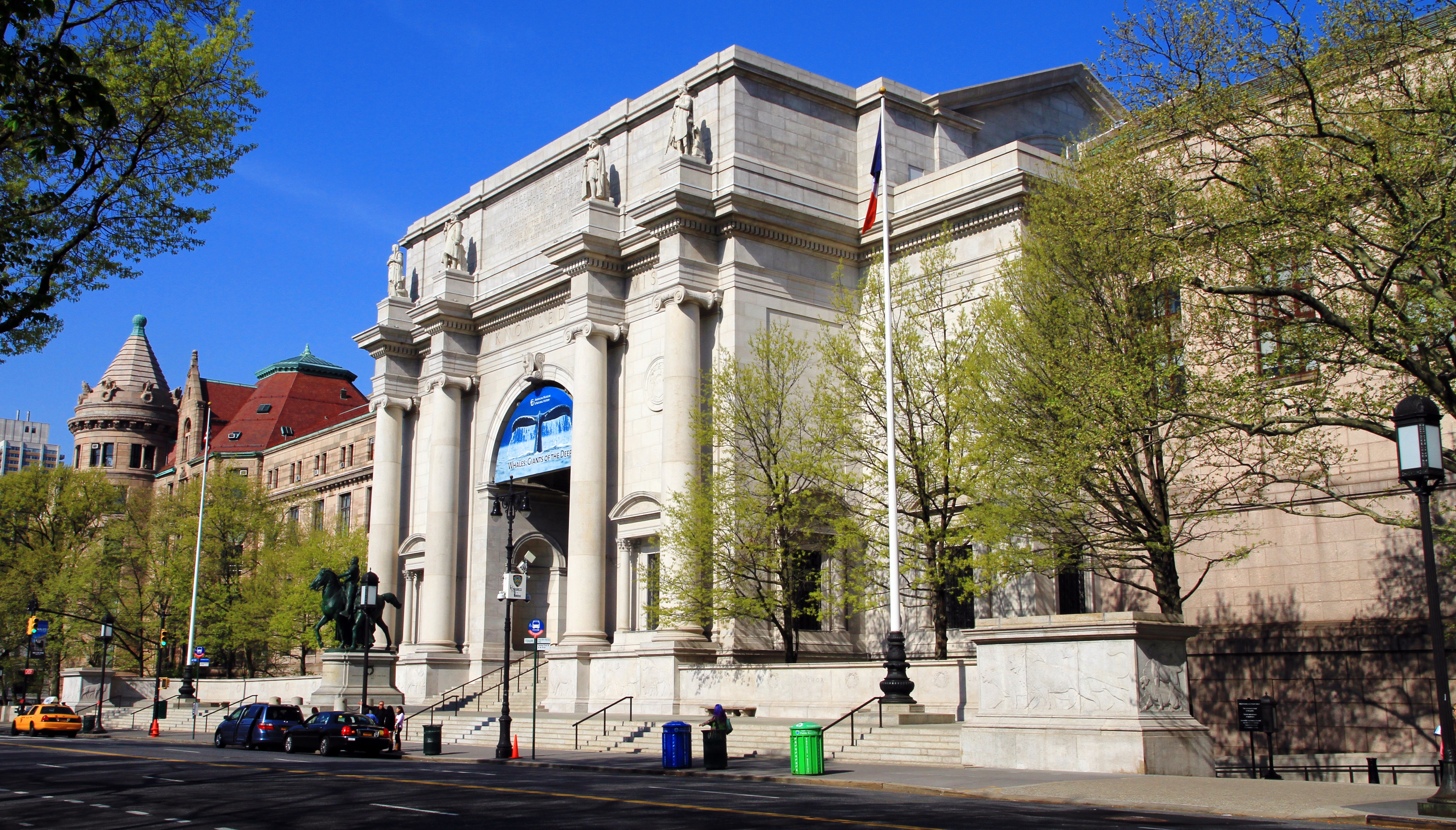
The American Museum of Natural History (AMNH) is a natural history museum on the Upper West Side of Manhattan in New York City. Located in Theodore Roosevelt Park, across the street from Central Park, the museum complex comprises 21 interconnected buildings housing 45 permanent exhibition halls, in addition to a planetarium and a library. The museum collections contain about 32 million specimens of plants, animals, fungi, fossils, minerals, rocks, meteorites, human remains, and human cultural artifacts, as well as specialized collections for frozen tissue and genomic and astrophysical data, of which only a small fraction can be displayed at any given time. The museum occupies more than 2,500,000 ft2 (232,258 m2). AMNH has a full-time scientific staff of 225, sponsors over 120 special field expeditions each year, and averages about five million visits annually. The AMNH is a private 501(c)(3) organization. The naturalist Albert S. Bickmore devised the idea for the American Museum of Natural History in 1861, and, after several years of advocacy, the museum opened within Central Park's Arsenal on May 22, 1871. The museum's first purpose-built structure in Theodore Roosevelt Park was designed by Calvert Vaux and J. Wrey Mould and opened on December 22, 1877. Numerous wings have been added over the years, including the main entrance pavilion (named for Theodore Roosevelt) in 1936 and the Rose Center for Earth and Space in 2000.
The naturalist Albert S. Bickmore devised the idea for the American Museum of Natural History in 1861. At the time, he was studying in Cambridge, Massachusetts, at Louis Agassiz's Museum of Comparative Zoology. Observing that many European natural history museums were in populous cities, Bickmore wrote in a biography: "Now New York is our city of greatest wealth and therefore probably the best location for the future museum of natural history for our whole land." For several years, Bickmore lobbied for the establishment of a natural history museum in New York. Upon the end of the American Civil War, Bickmore asked numerous prominent New Yorkers, such as William E. Dodge Jr., to sponsor his museum. Although Dodge himself could not fund the museum at the time, he introduced the naturalist to Theodore Roosevelt Sr., the father of future U.S. president Theodore Roosevelt. Calls for a natural history museum increased after Barnum's American Museum burned down in 1868. Eighteen prominent New Yorkers wrote a letter to the Central Park Commission that December, requesting the creation of a natural history museum in Central Park. Central Park commissioner Andrew Haswell Green indicated his support for the project in January 1869. A board of trustees was created for the museum. The next month, Bickmore and Joseph Hodges Choate drafted a charter for the museum, which the board of trustees approved without any changes. It was in this charter that the "American Museum of Natural History" name was first used. Bickmore said he wanted the museum's name to reflect his "expectation that our museum will ultimately become the leading institution of its kind in our country", similar to the British Museum. Before the museum was established, Bickmore needed to secure approval from Boss Tweed, leader of the powerful and corrupt Tammany Hall political organization. The legislation to establish the American Museum of Natural History had to be signed by John Thompson Hoffman, the governor of New York, who was associated with Tweed.
Hoffman signed the legislation creating the museum on April 6, 1869, with John David Wolfe as its first president. Subsequently, the chairman of the AMNH's executive committee asked Green if the museum could use the top two stories of Central Park's Arsenal, and Green approved the request in January 1870. Insect specimens were placed on the lower level of the Arsenal, while stones, fossils, mammals, birds, fish, and reptiles were placed on the upper level. The museum opened within the Arsenal on May 22, 1871. The AMNH became popular in the following years. The Arsenal location had 856,773 visitors in the first nine months of 1876 alone, more than the British Museum had recorded for all of 1874.
Adapted from Wikipedia (CC BY-SA). Photography via Wikimedia Commons.