
Elcho Island
Australia · Oceania
About
Elcho Island, known to its traditional owners as Galiwin'ku (Galiwinku) is an island off the coast of Arnhem Land, in the Northern Territory of Australia. It is located at the southern end of the Wessel Islands group located in the East Arnhem Region. Galiwin'ku is also the name of the settlement where the island's largest community lives. Elcho Island formed part of the traditional lands of the Yan-nhaŋu, according to Norman Tindale. According to J. C. Jennison, the Aboriginal inhabitants were the Dhuwal, who called themselves the Kokalango Mala (mala = clan).
Elcho Island was named by the blackbirder and paddle steamer pioneer, Captain Francis Cadell in 1867 on an expedition to locate a suitable place for a colonial outpost. Cadell named it after Lord Elcho, who was the representative in British parliament for Cadell's hometown in Scotland. The settlement was originally established as a Methodist mission in 1942, with the arrival of Harold Shepherdson, a lay associate of the Methodist Overseas Mission from Milingimbi. It remained under church direction until 1974, when it became self-managed.
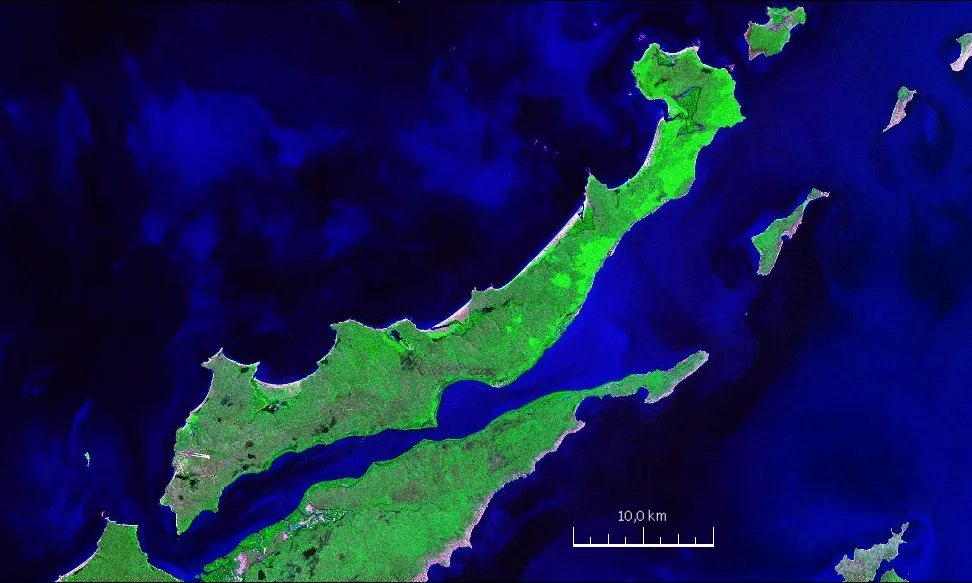
Elcho Island is approximately 60 kilometres (37 mi) long and 6 kilometres (3.7 mi) across at its widest point. It is bounded on the western side by the Arafura Sea and on the east by the Cadell Strait. Elcho Island is a short distance away from the mainland and Howard Island. Galiwin'ku, located near the island's southern tip, is the main community on the island. It is the largest and most remote Aboriginal community in northeast Arnhem Land, the second largest Aboriginal community (in terms of concentrated population) in the Northern Territory, and ranks eleventh in population of the 69 local government bodies in the Territory. There are 60 mala or hereditary tribal groups, with up to 22 different dialects being used in the community. The lingua franca is now Djambarrpuyngu. The people of Galiwin'ku, approximately 2,000 residents, retain their traditions and culture. These are passed to future generations by adherence to strict traditional methods and education, including a means to help them embrace the wider Australian community. There are also many outstations, including Inglis Island on the namesake island and Matamata, Maparru, and Gariyak on the mainland. The island has a base population of 2,200 people, including 70 non-Aboriginal people. It was the home of the late Aboriginal folk musician Geoffrey Gurrumul Yunupingu. The population of Galiwin'ku varies during the seasons, with many outstation residents migrating to the community during the wet season due to inaccessibility. The community also serves approximately 25 outstations with a total population of approx. 450 people, with 12 of the outstations on Elcho Island, which are listed from north to south:
Nanyingburra Gawa (Gäwa) Ban'thula (Gampura) Djurranalpi (Djanalpi) Dharawa Gitan Gulmarri Watdagawuy Dhayirri Dyawili (First Creek) Dadupu Galawarra Eighteen connected clan groups within the Elcho Island locale have close cultural ties with mainland Arnhem Land clans and language groups. The most commonly spoken languages are Djambarrpuyngu and Gupapuyngu (both Yolngu Matha languages). However, there are at least 12 more languages in use in the region.
Galiwin'ku is a traditional Aboriginal community with restricted access; permission to visit is required by law and can be made through the Northern Land Council directly or via the Galiwin'ku Council. Total alcohol restrictions apply and there is no petrol available on the island; all petroleum-powered vehicles use the low-aromatic petrol "Opal" as a fuel substitute. The island is served by Elcho Island Airport.
Adapted from Wikipedia (CC BY-SA). Photography via Wikimedia Commons.