
Cozumel Island
Mexico · Americas
About
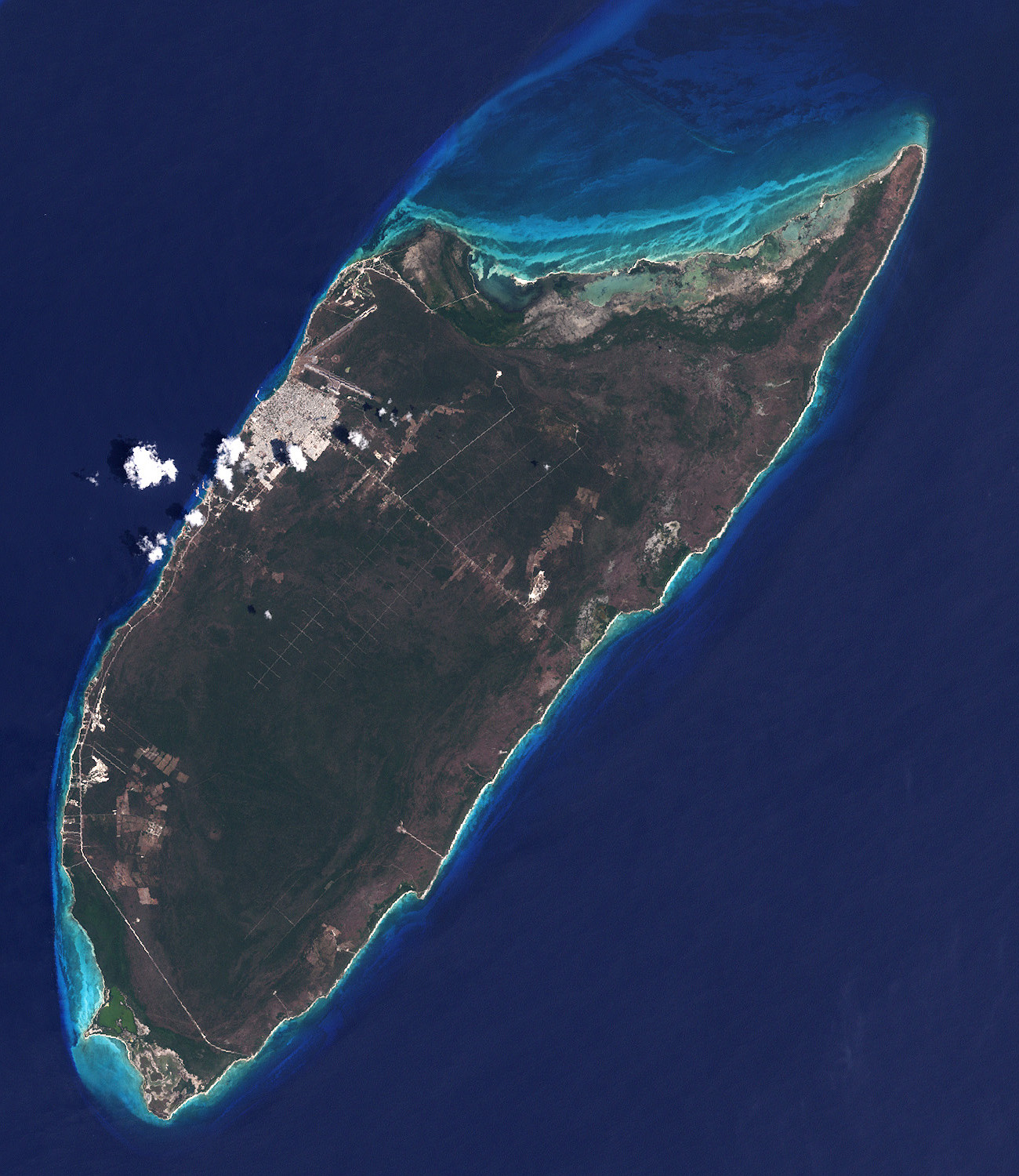
Cozumel (Spanish pronunciation: [kosuˈmel]; Yucatec Maya: Kùutsmil) is an island and municipality in the Caribbean Sea off the eastern coast of Mexico's Yucatán Peninsula, opposite Playa del Carmen. It is separated from the mainland by the Cozumel Channel and is close to the Yucatán Channel. The municipality is part of the state of Quintana Roo, Mexico. In 2023, Cozumel was designated a Pueblo Mágico by the Mexican government, recognizing its cultural and historical importance.
The name Cozumel was derived from the Mayan "Cuzamil" (also spelled "Cutzmil") or "Ah Cuzamil Peten" in full, which means "the island of swallows" (Spanish: Isla de las Golondrinas).
More than 30 archaeological sites have been identified on Cozumel, with evidence of occupation extending from the Late Preclassic period, about 300 BCE to 300 CE, until the arrival of the Spanish in the early 16th century. The sites range from large inland settlements to isolated coastal altars, some of which have been destroyed by modern construction. Cozumel flourished from about 1250 CE onward as an important port and pilgrimage centre, which encouraged the development of local honey and wax industries. It formed part of a maritime trade route that followed the coast of the Yucatán Peninsula from present-day Honduras to Tabasco and Campeche. Merchants and pilgrims travelled to the island, where they worshipped Ixchel, a Maya goddess associated with the moon, childbirth and weaving. There was likely a settlement of Chontal Maya traders from the present-day area of Tabasco or the Laguna de Términos. San Gervasio was the most important city on Cozumel and participated in the trade network linking settlements across the Yucatán Peninsula. The settlement had a long period of occupation and consisted of several architectural groups connected by an extensive network of raised roads known as sacbés. It is dated principally to the Late Postclassic period, about 1250 to 1550 CE.
The first Spanish expedition to visit Cozumel was led by Juan de Grijalva in 1518. In the following year, Hernán Cortés stopped by the island on his way to Veracruz. The Grijalva and Cortés expeditions were both received peacefully by the Maya of Cozumel (unlike their experiences on the mainland). Even after Cortés destroyed some of the Maya idols on Cozumel and replaced them with an image of the Virgin Mary, the native inhabitants of the island continued to help the Spanish re-supply their ships with food and water so they could continue their voyages. Gerónimo de Aguilar, a captive of the Mayans, was rescued at this time. As many as 10,000 Maya lived on the island during the early 1500s, but in 1520, infected crew members of the Pánfilo de Narváez expedition brought smallpox to the island, and by 1570, only 186 men and 172 women were left alive on Cozumel. In the ensuing years, Cozumel was often the target of attacks by pirates, and in 1650, many of the islanders were forcibly relocated to the mainland town of Xcan Boloná to avoid the buccaneers' predation. Later, in 1688, most of the rest of the island's population, as well as many of the settlements along the Quintana Roo coast, were evacuated inland to towns such as Chemax. In 1848, refugees escaping the tumult of the Caste War of Yucatán settled on the island, and in 1849 the town of San Miguel de Cozumel was officially recognized by the Mexican government.
In 1861, American President Abraham Lincoln ordered his Secretary of State, William Henry Seward, to meet with the Mexican chargé d'affaires Matias Romero to explore the possibility of purchasing the island of Cozumel for the purpose of relocating freed American slaves offshore. The idea was summarily dismissed by Mexican President Benito Juarez, and Juarez is still revered by the people of Cozumel because of this action. In 1862, Lincoln did manage to establish a short-lived colony of ex-slaves on Île à Vache off the coast of Haiti.
Adapted from Wikipedia (CC BY-SA). Photography via Wikimedia Commons.