
Bawean Island
Indonesia · Asia
About
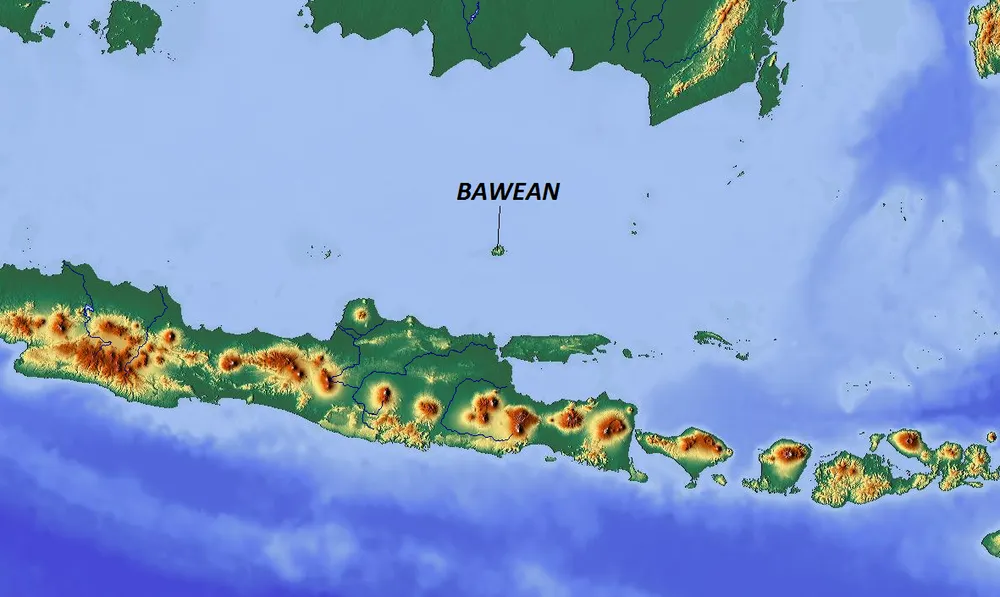
Bawean (Indonesian: Pulau Bawean) is an island of Indonesia located approximately 150 kilometers (93 miles) north of Surabaya in the Java Sea, off the coast of Java. It is administered as part of Gresik Regency of East Java province. It is approximately 15 km (9.3 mi) in diameter and is circumnavigated by a single narrow road. Bawean is dominated by an extinct volcano at its center that rises to 655 meters (2,149 feet) above sea level. Its population as of the 2010 Census was about 70,000 people, but more than 26,000 of the total (that is about 70% of the male population) were temporarily living outside, working in other parts of Indonesia, Singapore and Malaysia. As a result, females constituted about 77% of the actual population of the island, which is thus often referred to as "the Island of Women" (Indonesian: Pulau Putri). The 2020 Census revealed a population of 80,289, while the official estimate as of mid 2025 was 86,764. The island territory is divided into two administrative districts, Sangkapura and Tambak. About 63.8% of the population (about 55,344 in mid 2025) live in the district of Sangkapura, centred on the town of that name located on the southern coast of the island. The other 36.2% live in Tambak District, in the northern 36% of the island. The island has rich nature with many endemic species, such as Bawean deer which is only found on the island and is included to the IUCN Red List.
The island's name is believed to originate from the Kawi (or Sanskrit) phrase ba (light) we (the sun) an (is) – thus: "having the sunlight". According to the legend, Javanese sailors wandering in the mist in 1350 named the island because they saw a glimpse of light around it; previously the island bore the Arabic name of Majidi. During the Dutch colonization in the 18th to the 20th centuries, the island was renamed Lubok, but the locals and even the Dutch continued to use the name Bawean. The Dutch name fell out of use in the 1940s. As a linguistic variation, the island is also called Boyan and its natives Boyanese. These names are also common in Malaysia and Singapore, being brought there by numerous visitors from Bawean. Another popular appellation is the island of women (Indonesian: Pulau Putri). This originates from the predominance of the actual female population, as since the 19th century most males have taken part-time jobs outside Bawean. So whereas the nominal female population percentage amounted to about 52% in 2009, the actual fraction (corrected for residents abroad) approximated 77%. This imbalance has become the subject of national and international studies.
The name Bawean means "sunlight exists" in Sanskrit and was encountered by shipwrecked sailors in the 14th century, in reference to their excitement upon seeing clear skies after enduring fierce storms at sea. The island endures in its indigenous practice of dukun, a shamanistic role of traditional society. It is uncertain when humans first settled on Bawean. In the early Middle Ages ships sailing across the Java Sea often used the harbor on the island. The first records of permanent settlements on the island date to the 15th century. Most of the references to Bawean in regional (mostly Javanese) sources of the 16–17th centuries are associated with visits to the island of Muslim preachers. Mass conversion of islanders to Islam began after the death in 1601 of the local Raja Bebileono who favored animism and the arrival from Java of the Muslim theologian Sheik Maulana Umar Mas'ud. His dynasty became independent from the Javanese States, and his great-great-grandson Purbonegoro, who ruled the island between 1720 and 1747 visited Java as a sovereign ruler. The graves of Maulana and Purbonegoro are revered on the island, they are visited by Muslim pilgrims from other parts of Indonesia and are the main historical attractions of Bawean.
Adapted from Wikipedia (CC BY-SA). Photography via Wikimedia Commons.