
Antelope Island
United States · Americas
About
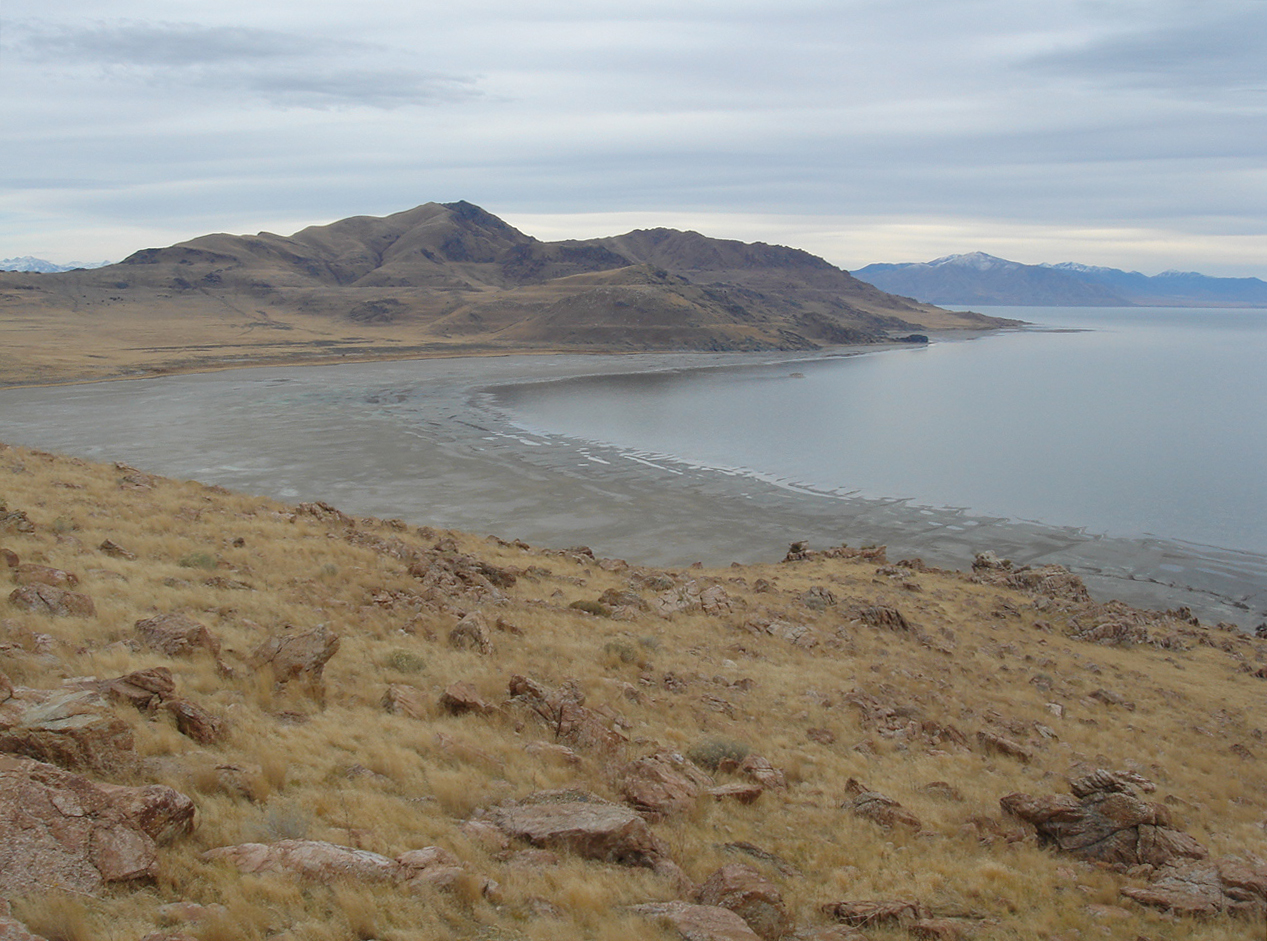
Antelope Island, with an area of 42 square miles (109 km2), is the largest of ten islands located within the Great Salt Lake in Utah. The island lies in the southeastern portion of the lake, near Salt Lake City and Davis County, and becomes a peninsula when the lake is at extremely low levels. It is protected as Antelope Island State Park. The first known non-natives to visit the island were John C. Frémont and Kit Carson during exploration of the Great Salt Lake in 1845, who "rode on horseback over salt from the thickness of a wafer to twelve inches" and "were informed by the Indians that there was an abundance of fresh water on it and plenty of antelope". It is said they shot a pronghorn antelope on the island, and in gratitude for the meat, they named it Antelope Island. Antelope Island holds populations of pronghorn, bighorn sheep, American bison, porcupine, badger, coyote, bobcat, mule deer, and millions of waterfowl. The bison were introduced to the island in 1893, and the Antelope Island bison herd has proven to be a valuable genetic pool for bison breeding and conservation purposes. The bison do well, because much of the island is covered by dry, native grassland. The geology of Antelope Island consists mostly of alluvial plains with prairie grassland on the north, east and south of the island, along with a mountainous central area of older Precambrian metamorphic and igneous rocks and late Precambrian to Paleozoic sedimentary rocks, covered by a thin layer of Quaternary lake deposits, colluvium and alluvium. The Precambrian deposits on Antelope Island are some of the oldest rocks in the United States, older even than the Precambrian rocks at the bottom of the Grand Canyon.
Archeological evidence dates the earliest habitation of Native Americans in Utah to about 10,000 to 12,000 years ago. Paleolithic people lived near the Great Basin's wetlands, which had an abundance of fish, birds, and small game animals. Big game, including giant bison, mammoths and ground sloths, were also attracted to the water sources. Over the years, the megafauna disappeared, while American bison, mule deer and pronghorn became more predominant. Around 8000 BC, this population was replaced by the Desert Archaic people, who sheltered in caves near the Great Salt Lake. Relying more on gathering than the previous Utah residents, their diet was largely made of cattails and other salt tolerant plants such as pickleweed, burro weed and sedge. Red meat appears to have been a luxury. The Desert Archaic people used nets and the atlatl to hunt water fowl, small animals and pronghorns. Artifacts include nets woven with rabbit skin and plant fibers, gaming sticks, woven sandals, and animal figures made from split-twigs. About 3,500 years ago, lake levels rose and the population of Desert Archaic people appears to have dramatically decreased. Artifacts discovered at Antelope Island State Park show that the island was occupied by prehistoric peoples more than 6,000 years ago. There are forty freshwater springs on Antelope Island. The Fielding Garr Ranch was built near the strongest and most consistent of the springs. Archaeologists have determined that human activity has taken place near these springs for at least 1,000 years.
The first Anglo-Americans to reach the island were John C. Fremont and Kit Carson. They explored Antelope Island in 1845 and named the island for the herds of grazing pronghorn. Captain Howard Stansbury used the island as a base. He mapped the lake and attempted to locate where the waters of the lake drained in an attempt to find a waterway to the Pacific Ocean. The first permanent settler on the island was Fielding Garr. Garr was sent to the island by LDS Church to establish a ranch for the "church tithing herds". The Fielding Garr Ranch was owned and operated by the church until the 1870s for the purpose of providing funds for the Perpetual Emigration Fund. This fund financed the immigration of Mormon converts from Europe to Utah. The ranch house, built in 1848, still stands and is the oldest Mormon-built home that is still on its original foundation, in Utah.
Adapted from Wikipedia (CC BY-SA). Photography via Wikimedia Commons.