
Amager
Denmark · Other
About
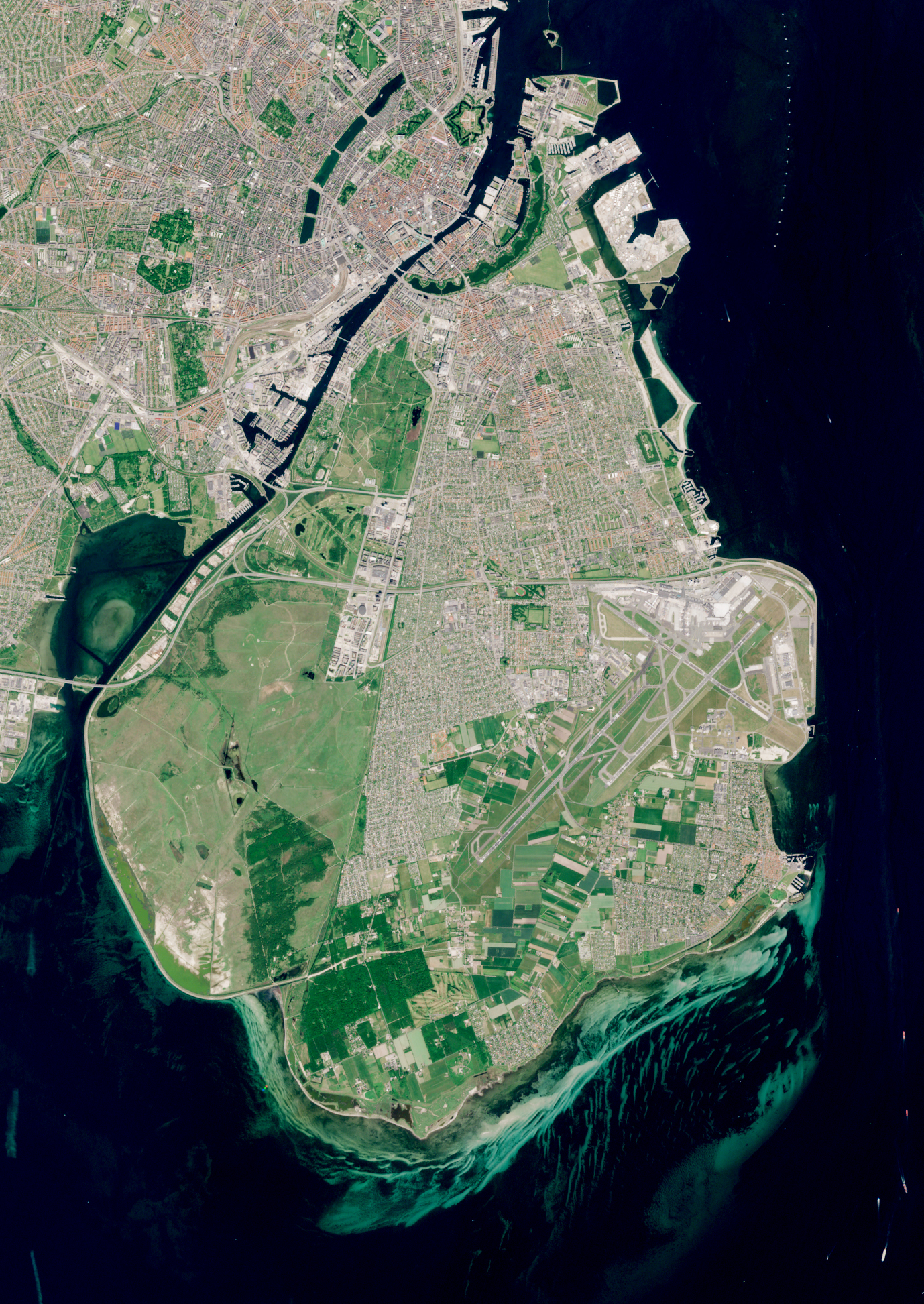
Amager (Danish pronunciation: [ˈɑˌmɑˀ] or, especially among older speakers, [ˈɑˌmɛˀɐ]), located in the Øresund, is Denmark's most densely populated island, with 225,746 inhabitants (January 2025). Amager is the largest island in the Øresund, and the only one with a large population. Amager is home to parts of Copenhagen including Freetown Christiania, as well as Copenhagen Airport. The island is connected to the much larger island of Zealand (Sjælland) by nine bridges and a metro tunnel, and to Sweden via the Øresund Bridge.
The northern part of the island is covered by parts of Copenhagen Municipality. South of the island's Copenhagen neighbourhoods lies Tårnby Municipality, parts of which also belong to the urban area of Copenhagen. More than half the island's population live in the urban areas belonging to Copenhagen and Tårnby. The southernmost part of the island, not part of Copenhagen's urban area, forms Dragør Municipality. Amager also has large nature areas, as well as some farmland. Various communities are located on Amager, including the Copenhagen neighbourhoods of Christianshavn, Islands Brygge, Amager Øst, Amager Vest, and Ørestad. Outside Copenhagen proper lie Dragør, Kastrup, and Tårnby. Whether or not Christianshavn (including Freetown Christiania) is part of Amager is subject to debate locally, partly due to the canal which separates them mostly, but not entirely from (the rest of) Amager. The Danish Agency for Climate Data, the Danish mapping authority, uses a definition of the island of Amager which includes Christianshavn.
Amager has long been populated, and well used, thanks to its rich soil and proximity to Copenhagen. In 1521, Christian II invited some Dutch farmers to move to Amager and grow vegetables to supply the Danish Court and Copenhagen. They were skilled farmers, and Amager was previously referred to as the "pantry of Copenhagen". The Dutch farmers enjoyed certain privileges such as their own government and institutions, as well as their own schools and priests. They also retained their traditional clothing (folkedragt), still used for folkloric dances etc. Due to this and a ban on mixed marriages, they maintained their own language, Amager Dutch, which remained spoken until 1858. This dialect's spelling and vocabulary was influenced by Danish, and it had heavier phonological and grammatical influence from Low German, due to the importance of Low German in trade in the Baltic Sea and the influence of Low German-speaking Lutheran clergy. It was only in the late 19th century that Copenhagen began to expand onto the island (Sundbyerne), and in 1902 these built-up areas were incorporated into Copenhagen. During the Second World War, in 1943, high unemployment in Copenhagen led authorities to drain a large part of the sea, west of the island, and build a dam to hold out the water, effectively adding 20 km2 - one half of Amager's previous area - to the island. The claimed area is currently known as Kalvebod Fælled, and was originally a military area, but today it is part of a newly constructed neighbourhood called the Ørestad, being thought of as an extension to central Copenhagen. This project was initiated by the Danish government. The beach area to the east of the island, known as Amager Strandpark (Amager Beach Park), which had fallen into disrepair since its inception in the 1930s, was extensively redeveloped between May 2004 and August 2005. A 2-km-long artificial island was constructed just off the mainland, from which it is separated by a small lagoon. Until the 1970s, Amager was used as a place to dump latrine waste; this led to a slang term for the island 'Lorteøen' (Shit Island). See Renholdningsselskabet af 1898. Today the waters off Amager are clean and feature popular and attractive beaches.
Adapted from Wikipedia (CC BY-SA). Photography via Wikimedia Commons.