

Greece
Capital: Athens · Europe
Greece is the cradle of Western civilisation — the birthplace of democracy, philosophy and the Olympic Games. In the eastern Mediterranean, with about 10 million people, it holds countless classical treasures like the Acropolis, alongside world-famous islands such as Santorini and Mykonos. Tourism and shipping anchor its economy. Greece once weathered a severe debt crisis with harsh austerity and reform, a key case for understanding the eurozone and sovereign debt. As an EU and NATO member, its geopolitical role in the eastern Mediterranean is drawing growing attention, and its ancient heritage belongs to all humanity.
Greece in world rankings
- 88th largest by population in the world (of 219)
- 98th largest by area in the world (of 219)
- 49th largest economy (GDP) in the world (of 178)
- 42nd highest GDP per capita in the world (of 178)
- Capital
- Athens
- Population
- 10,482,487
- Area
- 131,957 km²
- Currency
- euro
- GDP
- $280.6B
- GDP per capita
- $26,948
- Life expectancy
- 81.8 yrs
- Urban population
- 79%
- Calling code
- +30
- Internet users
- 86%
- Forest cover
- 30%
- Languages
- Greek
Greece compared with Taiwan
How Greece measures up against Taiwan — home to 23.3 million people across 36,193 km².
Countries bordering Greece


Latest news — Greece
More news →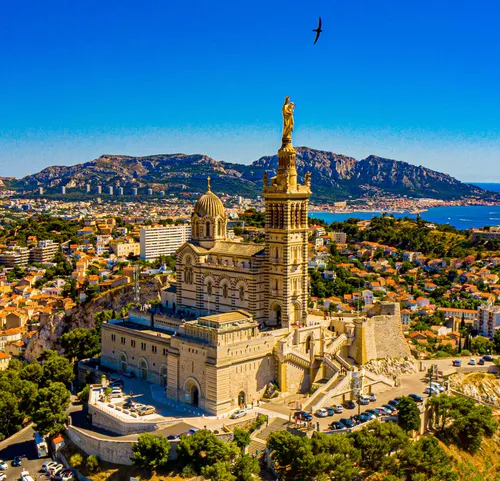
Protesters breach Marseille town hall, causing significant interior damage during demonstrations
Protesters forced their way into the municipal town hall of Marseille on Tuesday, causing significant interior damage before security forces intervened to
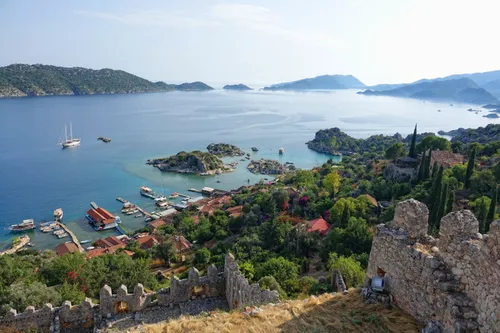
World's Oldest Known Shipwreck Discovered Off the Coast of Turkey
Archaeologists in Turkey have unearthed what is now confirmed to be the oldest known shipwreck in the world, dating back to somewhere between 2700 and 2400
Cornell University Suspends All Fraternity Social Events Following Gang Rape Allegations
Cornell University announced a sweeping campus-wide suspension on Friday, barring all fraternity parties and social events for the remainder of the 2026–27

Drones strike two Bulgarian merchant vessels; one sinks, crew missing.
Two merchant vessels were struck by unidentified drones off Bulgaria’s Black Sea coast on Friday, a day after a similar incident. One of the ships, a cargo

Anne Carson Wins 2026 Nobel Prize in Literature for Innovative Poetic Classics
The Nobel Prize in Literature was announced on 10 October 2026 by the Swedish Academy, awarding the honor to Canadian poet and classicist Anne Carson. The
Unidentified Drones Strike and Sink Commercial Vessels Off Bulgaria's Coast
Two commercial vessels have been struck by unidentified drones off the coast of Bulgaria, resulting in the sinking of at least one ship and leaving several
Country profile
Background
Greece won independence from the Ottoman Empire in 1830 and became a kingdom. During the second half of the 19th century and the first half of the 20th century, it gradually added neighboring islands and territories, most with Greek-speaking populations. In World War II, Greece was first invaded by Italy (1940) and subsequently occupied by Germany (1941-44); fighting endured in a protracted civil war between supporters of the king and other anti-communist and communist rebels. The communists were defeated in 1949, and Greece joined NATO in 1952. In 1967, a military coup forced the king to flee the country. The ensuing military dictatorship collapsed in 1974, and Greece abolished the…
Location
Southern Europe, bordering the Aegean Sea, Ionian Sea, and the Mediterranean Sea, between Albania and Turkey
Climate
temperate; mild, wet winters; hot, dry summers
Terrain
mountainous with ranges extending into the sea as peninsulas or chains of islands
Natural resources
lignite, petroleum, iron ore, bauxite, lead, zinc, nickel, magnesite, marble, salt, hydropower potential
Ethnic groups
Greek 91.6%, Albanian 4.4%, other 4% (2011 est.)
Religions
Greek Orthodox 81-90%, Muslim 2%, other 3%, none 4-15%, unspecified 1% (2015 est.)
Government
parliamentary republic
Economy
high-income EU and eurozone economy; growth above euro average, supported by private consumption and EU fund investments; structural reforms strengthening public finances and enhancing resilience within banking system; declining unemployment but low labor productivity and skill shortages
Greece · Travel guide
Understand
Visitors are drawn to the country's beaches and reliable sunny summer weather, its nightlife, historical sites and natural beauty. In 2018, Greece received 33 million visitors, more than three visitors for each of the country's residents.
The majority of visitors come to Greece from other European countries, although tourists from other world regions have been increasing in number. The vast majority of visitors visit from April through to October. Peak season is between May and September when approximately 75% of all tourists arrive. Most of the tourists and tourism industry are concentrated in Crete, the Dodecanese, Cyclades, and Western Greek Islands, and to a lesser extent the Peloponnese and the Halkidiki peninsula in Macedonia. There are still many rewarding areas in the country free of large-scale tourism. Many first-time visitors arrive in Greece with specific images in mind and are surprised to discover a country with such regional and architectural diversity. The famous whitewashed homes and charming blue-domed churches only characterise a specific region of the country (the Cyclades Islands). Architecture varies greatly from one region to the next depending on the local history. Visitors will find Neoclassical architecture in the cities of Ermoupolis and Nafplion, Ottoman-influenced buildings in Grevená and Kozáni, whitewashed Cycladic homes on the island of Paros, and pastel-coloured baroque homes and churches on Corfu. The nation's terrain is just as varied as its architectural heritage: idyllic beaches, towering mountain ranges, wine-producing valleys, vast stretches of olive orchards in the south, and lush forests in the north. Greece's historical sights are just as varied; the country is littered with just as many medieval churches and castles as classic
See
Few countries can pride themselves on a heritage as important to Western civilization as Greece. A range of first class historic landmarks remind one of the days when the great Greek emperors and writers made their mark on the development of science, literature and democracy. No less than 17 of those monuments are listed as World Heritage Sites. However, the many charming little islands, sandy beaches and picturesque whitewashed coastal towns are at least as much a reason to come for the millions of tourists that this Mediterranean country receives each year. Apart from that Greece offers a distinct and wonderful flora and fauna, with the odd tortoise appearing on the side of the road mor
Getting there
Entry requirements Greece is a member of the Schengen Agreement. See Travelling around the Schengen Area for more information on how the scheme works, what countries are members and what the requirements are for your nationality. In summary:
There are normally no immigration controls between countries that have signed and implemented the treaty; there may be such controls temporarily, such as in connection with important events and various crises. The operators may carry out identity checks before passengers board international flights, ferries or trains, even between Schengen countries. Citizens of the EEA countries and Switzerland do not need visas to travel in the Schengen area, and may stay up to 90 days with no requirements other than having a valid ID card or passport. See European Union#EEA citizens. Normal visas granted by any Schengen member are valid in all countries that have signed and implemented the treaty (with exceptions for some overseas territories). The granting country may offer additional rights (such as longer stays or right to work) that apply only locally. Citizens of Antigua and Barbuda, the Bahamas, Barbados, Mauritius, Saint Kitts and Nevis and Seychelles are permitted to work in Greece without the need to obtain a visa or any further authorisation for the period of their 90 day visa-free stay. However, this ability to work visa-free does not necessarily extend to other Schengen countries. For detailed regulations applied to your country, refer to the Greek Ministry for Foreign Affairs.
By plane
Athens International Airport in Athens is the country's largest, busiest airport and main hub, handling over 34 million passengers annually as of 2024, with direct year-round flights from all over Europe, the Middle East, China, and Singapore. F
Getting around
A frequently asked question of travellers in Greece is whether they should rent a car. The primary advantage of having a car is that you can cover a lot more ground per day if you're travelling in rural areas or on the larger islands: you can get almost anywhere in Greece by bus, but some isolated villages may only have one or two buses per day, and having your own car means you don't have to wait in the summer heat for the bus to come. Almost all archaeological sites are accessible by bus, but at some of the more remote, less famous, sites, the bus may drop you off up to a mile away from the site, while with a car you can almost always get right to the site via at least a rough road. On the other hand, going car-free in Greece is not only possible, but offers significant advantages, while driving involves a number of disadvantages. Though many people find driving in Greece easy and even pleasant, others are concerned by the high accident rate (one of the highest in Europe), the national reputation for risky driving, and the presence of many twisty mountainous roads, sometimes hugging the side of a cliff. Gas is as expensive as anywhere. (For more on driving conditions in Greece see below.) Driving in Athens and other big cities can be a frustrating, and sometimes hair-raising, experience, and finding parking can be very difficult. And having a car greatly restricts your flexibility when island-hopping, since only the larger, and usually slower, ferries offer car transport, which must be paid for in addition to your passenger ticket. Travelling by bus is not only cheaper but offers a greater chance of striking up conversations with both locals and other travellers than going by car. Language is not usually a problem for English speakers in using public transit: wherever
Cities & destinations in Greece 142
World Heritage in Greece 6
Museums in Greece 6
National parks in Greece 6
Airports in Greece 55
Tallest buildings in Greece 1
Caves in Greece 12
Nature reserves in Greece 12
Ports in Greece 8
Railway stations in Greece 12
Hospitals in Greece 12
Hotels in Greece 10
Shopping malls in Greece 2
Aquariums in Greece 12
Stately homes & country houses in Greece 3
Churches in Greece 12
Gardens in Greece 5
City parks in Greece 12
Notable schools in Greece 3
Music venues in Greece 12
Arenas in Greece 12
Casinos in Greece 1
Racecourses in Greece 2
Breweries in Greece 5
Windmills in Greece 1
Cemeteries in Greece 12
Observatories in Greece 6
Ski resorts in Greece 1
Prisons in Greece 5
Mines in Greece 10
Amusement parks in Greece 1
Reservoirs in Greece 10
Zoos in Greece 4
Canals in Greece 3
Palaces in Greece 9
Botanical gardens in Greece 1
Squares & plazas in Greece 12
Monuments & memorials in Greece 12
Libraries in Greece 12
Forts & fortresses in Greece 12
Tunnels in Greece 12
Power stations in Greece 4
Archaeological sites in Greece 12
Monasteries in Greece 12
Synagogues in Greece 8
Mosques in Greece 12
Cathedrals in Greece 12
Tallest towers in Greece 12
Tallest dams in Greece 10
Explore Greece by category
Country fields from Wikidata (CC0); flag via Wikimedia Commons; profile from the CIA World Factbook (public domain); travel guide from Wikivoyage (CC BY-SA); GDP, GDP per capita and life expectancy from World Bank Open Data (CC BY 4.0).